Morya0 (0)
A love louder than the differences.
IN PICS: MEGHANA | CONTRIBUTED BY: ACE (TELEGRAM)
FOR BEST EXPERIENCE, READ ON A COMPUTER OR LAPTOP

September in Mumbai, and the monsoon had not finished with the city yet. It had negotiated a partial withdrawal and nothing more, leaving the air thick and close, the sort that settled into skin and hair and clothes before you’d taken three steps.
Meghna’s kurta was sticking to her back by the time she reached the lane. She had made this walk a hundred times, in every state the sky had ever been in, and the sky owed her nothing new.
The lane was already running at full volume. The chaiwallah’s cart wreathed in steam at the corner. An autorickshaw leaning on its horn at another autorickshaw over a dispute that would resolve nothing and satisfy both parties. A woman on the third floor hanging washing while a pigeon watched from the parapet with the air of a building inspector. A stray dog stretched across the pavement outside the guava seller’s stall, and Meghna stepped over it as everyone on this lane stepped over it, and kept walking.
Her umbrella was doing nothing useful against the drizzle. She folded it down and kept moving.
She had the saree in a cloth bag over her shoulder, folded that morning at half past five on her own bed with a video propped against the pillow, which was as far as she had ever got with pleats on her own.
Aai had tried to teach her twice. Both times had ended with Aai doing them herself and saying nothing about it, and Aai was six hundred kilometres away in Sangli.
The first year in this building, she had turned up on installation morning already dressed and had been taken by the wrist, without a word, into a bedroom she had not been in before. She came out eight minutes later with pleats that fell straight and a waist that held, and it had never gone back to being her own job since.
She knew his building as well as her own. Which step creaked on the way to the second floor. Which neighbour would be in the doorway with chai and an opinion about the weather. Which floor Ammi’s cooking reached on a given morning.
Today it reached the ground floor. Cardamom, and something slow underneath it, the kind of cooking that had been going since before six.
The door was unlocked. It was always unlocked when they were expecting her. She pushed it open and stepped in without knocking, because she hadn’t knocked in three years, and Ammi called from the kitchen.
“Aa gayi toofan? Come, sit beta. Chai is ready.”

Meghna dropped the bag on the chair near the door and sat at the dining table, which was doing what it always did at this hour: holding Abbu’s newspaper, Ammi’s half-finished stitching, and the day’s first meal assembling itself somewhere between the kitchen and the surface. A hot glass found its way in front of her before she’d finished sitting.
Abbu looked up from the sports section and nodded, the nod that meant both good morning and I see you, no elaboration required, and went back to reading.
“Your Aai called me,” Ammi said, her back to the room. “Two weeks now. She says you don’t pick up.”
“I pick up.”
“And if you do happen to pick up, you say four sentences and then you have to go somewhere.” Ammi turned, and gave her the full assessment of a woman who had been feeding people for forty years and had opinions about the results. “She says you’re not eating.”

“Aai says that about everyone who isn’t actively eating in front of her.”
“She’s not wrong. Eat something before you go. I made—”
“Ammi, we’re going to be late.”
“There’s time till he finishes his shower, beta,” Abbu said, eyes on the newspaper. “Eat a little at least na.”
“He’s been in there since forever.” A pause, the eye-roll audible without being seen. “Yesterday he was late because he stopped to look at a bird.”
“It was a kingfisher,” Meghna said, and lifted her glass so it would hide her face before Ammi caught it.
“It was a bird,” Ammi said, to the stove.
Abbu turned a page.
The knock at the door was two short taps, the knock of someone who was not sure yet whether she was allowed to knock like a neighbour.
Ammi went. Mrs Fernandes was in the doorway with a steel dish held out in front of her like a document requiring signature. Three weeks in the building, same floor, opposite side, returning something Ammi had sent up on the day she moved in and had entirely forgotten sending.
“You didn’t have to wash it,” Ammi said, taking it.
“I did have to wash it.” Mrs Fernandes looked past her into the flat, and then, being a person constitutionally incapable of not asking, she added: “What is all this fuss going on outside? Since five in the morning there is drumming.”
“Ganesh Chaturthi,” Abbu said.
“That much I know from the flowers.”
Abbu folded the newspaper, which meant the newspaper was finished for the moment. “Ten days,” he said. “Ganpati Bappa comes into the house on the first day. Then every morning and every evening you do the aarti. Then on the tenth day the whole city takes him to the sea and puts him in it.”
Mrs Fernandes made the face of a woman being told something implausible in a reasonable tone. “You put him in the sea.”
“You bring him, you keep him from one to ten days, you send him back.” Abbu tipped his head towards Meghna. “This one runs the whole thing in her building. Installation is at ten. Three years now.”
“It’s my favourite,” Meghna said into her glass.
“Every year the marigolds are six inches too low and every year she makes the man climb again,” Ammi said, coming back with the dish rinsed anyway.

“And you go and watch?”
“Shahnaz Sayyed does not stand in the sun for marigolds,” Abbu said. “Shahnaz Sayyed watches from the balcony and sends food.”
“What are they shouting?” Mrs Fernandes said. “Since morning. There is a shouting.”
Abbu straightened in his chair and called it, the way a man calls something he has heard from a window for thirty years and never once said out loud until his own kitchen made him.
“Ganpati Bappa—”
“Morya,” Meghna said, from the table, not lifting her face.
Mrs Fernandes looked at all of them.

So they went again, properly. Meghna called it this time. Ammi and Abbu answered, Ammi with the flat unbothered confidence of a woman who had answered it from a balcony every year since 1987 and had never given the matter a second’s thought.
The third time Mrs Fernandes came in half a beat late and far too loud.
“Morya!”
“Correct,” Abbu said, and opened the newspaper.
Ammi asked her whether she ate fish, and Mrs Fernandes said she was from Vasai, what kind of question was that, and the two of them went into the kitchen.
Meghna wrapped both hands around the glass and looked down the narrow hallway at the closed bathroom door.
The shower was loud enough to drown everything. The street below, Ammi’s radio, the neighbour’s television through the wall: all of it gone, replaced by water and heat and the thing he had brought in here with him, which he had brought in here before, and had brought in here often enough that it no longer required an occasion.

Yesterday, at his desk, leaning over to point at something on his screen.
Her dupatta had slid off her shoulder the way it does when a woman leans. The soft, yet heavy curvature of her breasts, the deep valley between them and they way they moved when she moved.
He had looked, and had gone on looking for a full second past the point where it stopped being an accidentand then he had put his eyes on the screen and kept them there and said something about the traffic sheet.
He had been looking away from where his eyes wanted to be for three years.
He was extremely good at it.
His eyes were closed as his hand moved, stroking his cock, which was rock hard. But he was not looking away now.

In his fantasy she was on his bed, on her back, hair loose across the pillow, her kurta gone, her bra gone, nothing between his hands and the weight of her breasts, and she was pulling him closer and telling him not to stop.
He didn’t stop.
He moved down her: her stomach, her waist, the fabric bunched at her hips. She lifted her hips for him and he pulled the rest away.

She was open under his mouth, wet and warm. She said his name when he licked her pussy.
He had never once in three years heard that softness in her voice. It undid something in his chest even as it happened only in his head.
“Don’t stop Farhan,” she moaned, “it feels so good, don’t stop.”
He didn’t stop. His hand move kept moving as he imagined eating her pussy out and driving her closer and closer to an orgasm.

“Oh God, I’m coming, Farhan,” she screamed and came hard in his mouth. He stayed on her pussy, sucking her clit as wave after wave of her orgasm shook her body. He kept eating her through it, making it last.
His hand moved faster.
When her orgasm finally passed, he moved up her body. His mouth found the mole below her left ear, small, precise, invisible unless her hair moved. He had two years of knowing it was there and no permission to mention it. He pressed his lips to it.

In the version of the world where he was allowed to, he pushed his cock into her.
She arched her back, locked her legs around him and told him how much she had wanted this since they met.
He started moving in and out of her, her pussy clamping around his cock.
She asked him to go harder, and he started trusting hard into her.
By now, his hand was moving furiously around his cock.
He told her he can’t hold on anymore. She told him to finish inside her.
He was close. He whispered her name. In his mind, she was close too, her body starting to shake, her eyes closing, her mouth opening—
“Farhan.”
His hand stopped.

Abbu’s voice, through the door, through the steam, through the wall — the first sound that had reached him since the water started.
“Meghna’s here. Jaldi khatam karo. Hurry up or you’ll be late.”
He stood under the running water with one hand on the tile, going slack all at once.
“Ab kya khatam hoga,” he said, looking down.
Out loud, he kept his voice steady: “Almost done, Abbu.”
He turned off the tap.
Stood a moment in the quiet that followed, steam curling off his shoulders and watched his cock go limp.
Then he reached for the towel.

The bathroom door opened.
He came out with the towel low on his hips, hair wet, water tracking down his shoulders and the flat plane of his chest. Not the built kind of chest. The kind that came from twenty years of cricket and the badminton he still played on Sundays with people from the office, muscle laid on plainly, the body of a man who had never once looked in a mirror to check.
He went straight down the hall to the bedroom without looking at her.
She had half a second. She looked away before she had finished looking, and she was not surprised by any part of that, because she had been doing it for longer than she was prepared to count.
She drank her chai. It took some doing to make it look ordinary.
Ammi took the saree bag from the chair and took her into the bedroom. The door locked behind them.
“You watched that video again,” Ammi said, undoing the pleats unasked, because they were never right.
“It’s a good video.”
“It is a terrible video,” she said, turning Meghna around.
She stood behind her, folding them one over the other against her own forearm with the concentration of a woman who had done this for a daughter she did not have.

“Blue.”
“It’s the good one.”
“I know which one it is.” Ammi pushed the pleats in at her waist, tugged twice, and stepped back.
Meghna turned around to face her.
Ammi looked at her for a second longer than the pleats required, and then said, “Jhumkas,” and went to get them, and that was the end of it.
He was at the table when she came out. White kurta, the Lucknowi one that lived at the front of the cupboard from the first of Bhadrapada, dark trousers, his curls doing everything except lie flat. Ammi produced a comb without being asked and stood behind him working through it while he ate, muttering about men who had never heard of mirrors. He submitted to this with no complaint, mostly because it let him keep eating, which he was doing at speed and in the wrong order, while reading something on his phone, while answering a question Abbu hadn’t finished asking.
He caught Meghna’s eye across the table once. Held it a beat too long. Looked at his food.

The table was small enough that their knees could have touched if either of them had shifted. Neither shifted.
“Installation is at ten,” Meghna said.
“I know.”
“It’s nine fifteen.”
“I know.” He put the phone down. Picked it up. Put it down again. “I need to send one thing.”
“Farhan.”
“Sorry.” He put the phone face down.
“We will be late.”
“No chance.” He looked at her, and everything about him came to rest. The knee that had been going under the table stopped going.

He finished eating without checking anything, without a second conversation, without leaving the room to fetch a thing he had remembered halfway through.
She had never thought about the fact that he did this. It had always been how mornings went, all frenzy and disorder, and it had always been her job to bring it down to something usable. She didn’t mind. She had stopped examining why she didn’t mind some time in the first year.
“Done,” Ammi said, with one authoritative stroke. “Now he looks like a person.”
They left in a rush anyway.
Meghna first, Farhan pulling the door twice for things he’d forgotten, Ammi calling something after them from the top of the stairs that was already lost by the second landing.
The street took them in a gust of warm, wet air.
Behind them, the flat went quiet.
Ammi stood at the table collecting the glasses. Abbu turned a page.
“You saw?” Ammi said, not loud.

“I saw.”
“Three years, Riyaz. She dresses in my bedroom.”
He turned another page. “One day it will be hers.”
“Sohail was married at twenty-six and gone at twenty-seven and I get a phone call on Sundays.” She stacked the glasses. “This one is thirty-one and he finds an excuse to go out whenever I bring up marriage. Why won’t he just bring her home.”
“He will.”
“Inshallah,” Ammi said, and took the glasses to the kitchen.
Subject closed.
The Enfield was parked in the lane where it always was, technically not a parking spot but one through sheer consistency of occupation.

She got on behind him with the saree gathered in one fist, the same muscle memory that had been running since the second month they’d known each other. Her other hand at his waist. The engine turned over, that low familiar sound, and the lane opened up ahead.
Mumbai went past: the chawls giving way to wider roads, a temple freshly garlanded with marigolds wet from the morning, a hoarding for a phone nobody on this road would buy, vada pav from a cart they passed too fast to stop at. She had been on the back of this bike through three monsoons and one incident involving a goat neither of them fully agreed on the facts of. She knew his riding as she knew his face: the lean into a turn, the half-second before she’d have felt the brake, how his shoulders sat when traffic was building ahead.
He rode as he did almost nothing else, which was patiently.
They didn’t talk over the engine. This was usual.
Her hand was at his waist. It had been at his waist a hundred times before this morning, and would be at his waist a hundred times after it. He never gave any sign of noticing, and she had been arguing with herself about what that meant for two years and had never once won it.
The city took the thought away before she could do anything with it.

The building’s common area had been transforming since before dawn, and Meghna had been on the phone about it since Tuesday.
She came off the bike, put the pallu over her shoulder, and was working within ninety seconds.
The mandap frame was up. The idol was still in the tempo. Kulkarni kaka had the toran half-strung and one end of it in his teeth. Shobha aunty had arrived with the jasmine at seven as she had every year since the building was built, same source, same morning, and had already had a disagreement with the flower boy about the roses.
“Six inches,” Meghna said to the man on the ladder, about the marigolds over the archway. He looked at her, looked at the garland, looked back at her, and started climbing, because they had done this enough times.
Farhan was already carrying. Nobody had asked him to, and he hadn’t waited to be asked. He had the crate of steel plates, and then the amplifier, and then somebody’s chair, and then he was holding the ladder for Kulkarni kaka because Kulkarni kaka had said “arre, pakad” without turning round and without any consideration of who was standing there.
The idol came out of the tempo at ten past ten.
It took six of them. Farhan was at the front left, and Meghna, because there was nobody else free and because it was hers, took the front right, and for eleven metres and one step up they carried the same weight between them. She could feel every adjustment he made through the base. Her forearms were shaking by the fourth metre. So were his. Their hands were nine inches apart on the same wood and the crowd was chanting behind them and there was nowhere at all to put any of it.
They set the idol down. The chant went up.
She stepped back with her arms burning and turned away from him to say something completely unnecessary to the flower boy.
Later, when it was flowers and incense and the aunties settling into position, Shobha aunty put a hand on Meghna’s arm and looked at Farhan across the hall, who was carrying somebody’s grandmother’s chair to a better spot without having been asked.
“Bring him next year also,” she said. No edge. She meant it warmly and completely.
Meghna said, “He comes on his own,” which was true and was not an answer, and Shobha aunty said “Hmm” and went to deal with the roses.
The evening aarti.
The hall was full. The building’s families in their good clothes, the ones who had come down early standing in front, the ones who were too polite to say they wanted to be in front standing behind and minding.
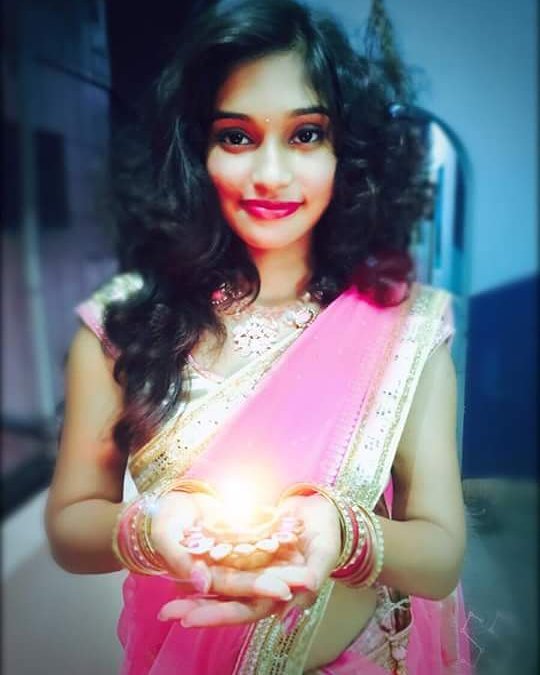
She guided his hands through it, as she had the first year, and the second, and the third, which was two years past the point where he had needed guiding. Her hands over his, adjusting the angle, the circular motion, the arc of it. His hands were warm under hers and entirely still. He let her.
He had been here for every Chaturthi since she moved into this building, which was as long as she’d had a Chaturthi to invite him to, and none of it had ever once required explaining.
It went the other way too. She had spent every Eid of those three years at his place, in Ammi’s kitchen from six in the morning, because after the first year Ammi had put her in charge of the sheer khurma and never once taken it back. She knew where the good dates were kept and which pan Ammi refused to replace. Abbu handed her the phone when relatives called, because she was better at the long conversations than either of his sons.
Nobody had explained that either.
The comment came from Desai aunty, second floor, not aimed at them but pitched to carry.
“Three years he’s been coming for the aarti,” she said, to the two women beside her, in the voice used for observations everyone is meant to hear. “So much devotion. So regular. And I always wonder — for Bappa, is it?”
The two women beside her did not disagree.
Meghna’s hands stopped over his. He felt a slight tremor as her grip over his hand tightened.
She had an answer ready for the version of that sentence people actually meant. She had been carrying it for three years and it was a good one and she’d have enjoyed using it. This was not that sentence, delivered where it could be denied later, and she had no answer for that kind.
Under her hands, his went completely still. “Jaane de, yaar. Not worth it. Not here. Just let it go,” he whispered.
She glared at him, but her grip relaxed.

She let it go. She turned back to the flame and finished the aarti with her hands over his and her face doing nothing at all. Desai aunty moved off towards the modak with the satisfaction of a woman who had landed something.
Afterwards, at the edge of the crowd, with the smoke thinning in the humid air and the chai coming round:
“Why do you always stop me?”
He looked at her. “Because you’d have finished her.”
“Yes.”
“And it costs you more than it costs me. You live here.” He took a glass off the tray and handed it to her without asking whether she wanted it. “Ten years from now she is still in 2B and I am still somebody’s guest.”
“Don’t say that.”
“Besides. What would I say to Desai uncle if you finished her.”
“He’d be relieved.”
“Probably.” He drank his chai and didn’t move. “But why take a chance.”
She stood next to him with hers going cold in her hand. She had not been defending herself. He kept grinning at her until she smiled.
“Chai pi,” he said, and nudged her shoulder with his.

The agency ran on the ninth floor of a building in Lower Parel that had been a mill and had never quite stopped smelling like one when it rained.

Meghna wrote copy. Her name on the door of the writers’ room said M. KHARE in vinyl letters, the K half-peeled since Holi. Farhan planned and bought media, two aisles away, under a nameplate that said F. SAYYED.
In three years they had learned each other’s work the way people do when the two jobs are joined at the hip and the deadlines are shared: she knew what a slot change did to a headline, he knew which of her lines would not survive being cut to seven seconds, and both of them had stopped explaining the obvious to each other some time in the first six months.
The festive campaign for the paint client had been signed off in July and had been coming apart since the last week of August.
The client had moved the launch forward. The plan had moved with it. Her copy had been written for a fifteen-second spot and was now living in a ten, and the ten had been sold in a slot that ran at nine forty on a Monday between two things it had no business sitting between.

“It’ll work,” Farhan said, on Tuesday, going past her desk with a laptop open in one hand.
“It won’t work.”
“It’ll work by Thursday.”
“That’s not the same sentence.”
He was already at the lift.
Kiran, at the next desk, did not look up from a layout. “He’s not wrong.”
“He’s not right either.”
“No, he’s just fast.” Kiran looked at Meghna, who was still looking at the lift he had disappeared into. “At work.”
Wednesday, the cafeteria at noon. The full queue at the dal-rice counter, someone on speakerphone the whole room was involuntarily part of, the institutional sambar smell no ventilation system had ever beaten.
Meghna came in with her tray and looked for him, which she did without noticing she did it, and had done since her first week in that building.
He was at the window table with Perizad from accounts, petite and fine-boned and the kind of Parsi beauty that stopped a room. Perizad had a hand on his forearm and was leaning across the table with her whole attention on him.
Farhan was doing four things. A phone in his other hand. A plate half-eaten. An answer arriving a half-beat behind the question. His elbow on the table and then off it and then on it again. He laughed at something and the laugh came out a fraction too loud, and he heard it himself, and looked at his plate.
Then he looked up.
Everything in him came to rest.
The phone went face down on the table. The hand that had been doing something with his fork stopped doing it. His whole body settled the way it settled at his mother’s dining table at nine in the morning, and he sat there in a full cafeteria looking at Meghna in the doorway with a tray in her hands.
Perizad said something and touched his arm again.

He did not react to it. Not a flinch, not a glance. He had not registered that anyone had touched him.
Meghna stood with her tray.
What she felt was not new and had never been new. It arrived the same way it had arrived when a girl called Anushka from client servicing spent four months finding reasons to be at his desk, and the same way when Swati came down from Delhi for a pitch and stayed a week. It sat low under the sternum with an edge on it. She knew its shape the way you know a tooth that has ached for two years and that you have decided, permanently, not to see anyone about.
Because this was the thing. He did it for her and only ever for her, in front of anybody, without appearing to know he was doing it, and it had been going on for three years, and it meant nothing. She had established that. She had established it repeatedly, at length, alone, at two in the morning, and had come to the same conclusion every time and had never once believed it for more than a day.
And under it, worse than it:
Perizad from accounts could put her hand on his arm in a cafeteria at noon.
Meghna had known him for three years and had never once touched him inside that building.
She found a table near the pillar with her back to the window and ate her food.
Behind her, a glass went over, and Farhan swore at it, and somebody laughed, and a chair scraped.
Serves you right, she thought, and did not turn round.
He found her in the corridor afterwards.
“Why didn’t you come sit with us?”
“You looked busy.”
“We were having lunch.”

“You looked like you were having a very good lunch.”
He opened his mouth and shut it.
“I had a deadline,” she said, and looked at the wall just past his ear, which she almost never did, being a direct-eye-contact person and always having been one. “The paint thing. Which you broke.”
“Okay,” he said, and let it go, and she carried the whole of it home on the bus because he had a meeting and didn’t wait.
Kiran, packing up at seven, said, “You could just tell him.”
“Tell him what?”
Kiran zipped her bag. “Exactly.”

That night he did what he had done on many such nights.
It started with the perfume she’d worn since the second year, which was not expensive and which he could pick out of a lift full of people, and the sound she made in her throat when something at work was stupid, and the way her brow creased and her lips pushed out when she was concentrating.

His hand went to his cock. He was already hard.
He closed his eyes and started stroking himself.
In his mind, his cock was in her pussy. Her legs around his hips. He moved. She pushed up to meet him. His hand moved faster because she said harder. She was close. He was close. She came. He groaned and let go.
Afterwards he lay in the dark, breathing, waiting for it to clear out of him the way it always cleared out, the small mechanical mercy of it, the thing that let him sit across a table from her the next morning and eat his food.
It didn’t clear.
He lay there a long time.

The days went the way the ten days of Ganeshotsav always went.
Morning aarti before work. Evening aarti after. The lane strung with lights that came on at different hours depending on which building remembered first.

Dhol practice two streets over, getting more competent by the day. Incense threading through the humidity every morning and the smell of frying from the stalls that had appeared overnight along the main road.
He was there every evening. He had always been there every evening.
On the fourth day Kulkarni kaka handed him one end of a rope and a set of instructions, and on the fifth somebody put the steel plate of prasad in his hands because his hands were the nearest ones free, and he carried it round the hall the way he had carried it round the hall the year before.
What was new was that she now knew when he’d arrive. Not the time, because in three years he had never once arrived when he said he would, but the sound of the Enfield turning into the lane from four buildings away.
She had known that sound for two years. She had been listening for it for two years. She had simply never let it be a fact she owned.

On the sixth evening the building lost power for forty minutes.
It happened the way it always happened, without warning, mid-sentence, the fans stuttering to a stop and the lane outside going the particular dark of a Mumbai blackout, streetlight and window-light gone at once.

Somebody two floors down produced a torch. Somebody else swore cheerfully about the electricity board. Meghna and Farhan were on the stairwell landing between the third and fourth floors, on their way down for the evening aarti, and there was nowhere sensible to go in the dark except where they already were.
“Don’t move,” he said. “You’ll break your neck on these stairs.”
“How about I break your neck?”
“You can try, but my bet is on the stairs taking you first.”
“You say that like you know the stairs better than I do.”
“I know your knees. You’ve turned an ankle on this exact landing.”
“Once.”
“Once is enough.”

He was close enough that she could feel the heat coming off him, could smell the cedar of whatever he put on in the mornings under the sweat of a full day. Neither of them switched on a phone torch. Neither of them mentioned that neither of them had switched on a phone torch.
The building settled around them. Voices calling on other floors. Somebody’s child laughing at the novelty of the dark. Somebody’s radio running on batteries two floors up, playing something old.
His hand found her elbow, the way it always did in a crowd, an old habit from a hundred crowded lanes and buses. This time there was no crowd. There was the dark, and the two of them standing close enough that the back of that same hand lay against the bare skin at her waist where the kurta had ridden up.
Neither of them acknowledged it.
Neither of them stepped back.
Forty minutes is a long time. It was long enough for the child two floors down to get bored of the dark and start crying about it. It was long enough for the radio to finish one programme and start another. It was long enough that she could hear him breathing and could tell, from the rhythm of it, that he was doing what she was doing, which was standing extremely still and thinking about a distance of four inches.
His thumb moved. Once. A centimetre, along the skin at her waist, and stopped.
She did not move at all.
The power came back with a small city-wide sigh, fans coughing to life, and the landing filled with ordinary light, and he took his hand off her elbow as though it had never been anywhere else.
“Farhan.”
“Aarti,” he said, and his voice wasn’t steady.
“Yeah.” Hers wasn’t either.
She got through the aarti. She got through the chai afterwards, and Desai aunty, and a long conversation with Shobha aunty about whether the roses had been worth it.
She went up to her flat at half past ten and shut the door and stood with her back against it and was so angry she could not see straight.
Forty minutes. Four inches. His hand on her the entire time. Nobody on the stairs. Nobody coming.
And nothing. Again. Nothing, again, for the third year running.
He rode home the long way, which was not a decision he made.
Forty minutes in the dark on a landing, and the whole of it available to him, and he had moved his thumb one centimetre and stopped, and he had spent the aarti afterwards standing three feet to her left running the arithmetic he had been running for three years.

If he was wrong, he lost the kitchen at six in the morning on Eid. He lost his mother’s face when the door opened. He lost the bike and the lane and the person who told him what his own copy was doing wrong before he had finished asking.
He lost every evening of every September.
Three years of standing in a hall while a woman on the second floor said things at a volume designed to be deniable, and taking it, and the reason he took it was that he had no standing.
He was a guest. A guest can be asked not to come.
And there was the other arithmetic, which was worse, and which he did not do often, because it had no numbers in it at all: that she stood next to him at the flame with her hands on his and he could not tell, he had never once been able to tell, whether that was love or three years of habit wearing the same face.
He got home at eleven and did not sleep either.
That night, alone, she gave herself the thing she would not say out loud.
She did not tell herself she hadn’t planned it. She had stopped telling herself that a long time ago.

What she told herself, every time, was that it didn’t count, and then afterwards she didn’t think about it, and that arrangement had held for two years and was holding badly tonight.
She started where the landing had ended.
His thumb, moving that one centimetre and stopping. In the dark of her own room she took the centimetre away from him and gave herself the rest of it: his hand going flat against her waist instead, his whole hand, and then the pull, and her back against the wall of that landing with the building talking on every floor around them and his mouth at her throat and neither of them caring who came down the stairs.
Her own hand knew exactly where to go. It had two years of practice.
She let herself have all of it. Him not stopping. Him not letting go of her elbow when the lights came back. Him saying something instead of the word aarti. Him, for once in three years, doing something with any of it.

She came with his name nearly out loud in an empty flat, muffled into her own pillow.
Six kilometres away, three nights earlier, his had been muffled into his.
Neither of them ever found out.
She lay in the dark afterwards with her heart still going and understood, with a clarity that did not startle her, that she had known this for two years and was no longer capable of pretending she had not.
She did not sleep well again for the rest of the week.

The eighth day, the campaign broke.
The spot went out at nine forty on the Monday in a slot Farhan had bought and then re-bought, and by ten past ten the client was on the phone to the servicing head, and by eleven the servicing head was in the room, and by half past eleven it was clear that the version that had aired was the version cut to the old slot length, which meant Meghna’s line was gone at the eight-second mark and what was left was a paint tin and nothing to say about it.

It was not her mistake. It had her name on it.
The room emptied at one. Meghna stayed. Farhan stayed, because he had the traffic sheets and because it was his slot.
“I’ll fix it by Friday,” he said. “I’ll get the Friday nine-thirty and we’ll run the full cut. Nobody will remember Monday.”
“I’ll remember Monday.”
“Meghna—”
“Do you know what I said in that meeting? Nothing. Because there is nothing to say. Because there is no version of the sentence it was the media plan that doesn’t sound like a woman blaming a man she — has lunch with.” She had her hands flat on the table. “You moved the slot on Tuesday and told me on Wednesday.”
“I told you Tuesday.”
“You told me it would work by Thursday. That is a different sentence and I said so at the time.”
He said nothing, and something in that was worse.
“It’s not the slot,” she said. “It’s never the slot, that’s not — you start eleven things and you finish nine, and you’re so quick that everybody claps for the nine and nobody counts the two, and I have been the one counting the two for three years, and I don’t mind, that’s the thing, I have never once minded, I just count them and I fix them and I don’t say anything, and then it’s the next thing and the next thing and you’re already gone, you’re always already gone, you move and you move and you move and nothing. Nothing in your life is ever finished, Farhan, nothing, and somebody has to stand there wondering and waiting for you, and I am so tired of standing there.”
He went still.

It happened all at once, the way it did, and she saw it happen and understood immediately that she had put it there and that it was the wrong stillness, the first wrong one in three years.
“I’m sorry. I made a mistake,” he said. He didn’t look up.
“I’m not talking about the spot.”
“What are we talking about?”
“Never mind.”
“No, you’re right.” He gathered the traffic sheets. It took him three seconds. “I’ll get the Friday slot.”
He picked up his bag and went.
She sat in the empty meeting room for a long time.

He got as far as the lift and then took the stairs, nine floors, because there was nowhere in that building to put it.
Nothing in your life is ever finished.
It was true. That was the entire difficulty with it.
He had spent thirty-one years being fast and being forgiven for it, and somewhere in there he had built a life out of the forgiving, and the one person who had never once made him pay for it had just handed him the bill in a meeting room with the door open.
And under that, running the whole time, a smaller and much worse thought that he was not able to look at directly: that she was not talking about the media plan.
That she had been counting the two for three years. That whatever it was she had actually been waiting for him to finish, he had not finished it, and she had finally run out.
He walked to Elphinstone and did not take the train.
He got the Friday nine-thirty at four the next afternoon by giving away two slots in October that he would have to answer for in October. He did not tell her.

He called at four the next afternoon.
“I can’t come tonight.”
“Okay.”
“The client’s asked for a review at seven. It’ll go to nine, maybe later.”
“You don’t have to explain.”
“I’ll come tomorrow.”
“You don’t have to come tomorrow.”
“Meg—”
“I said okay,” she said, and hung up, and put the phone face down on her desk and looked at it.
At the evening aarti the hall filled the way it filled, and the plates came round, and the dhol started up in the lane.
Desai aunty was behind Meghna at the aarti.
“Sharda,” she said to one of the two women beside her, at exactly the volume she used, at exactly the moment the singing dropped. “No devotee today?”

Meghna’s knuckles went white.
One of the women next to Desai aunty laughed and covered it.
“So regular for three years, and now suddenly—”
“He’ll be here,” Meghna said, into the middle of the hall, at full volume, to nobody in particular and to every single person in that room, with her hands in front of her and her face absolutely level.
She had no reason on earth to believe it.
Desai aunty said, “Of course, of course,” in the tone of a woman collecting on a bet she has already won, and moved off. “Unless he’s found some other Pooja. Or an Aarti.”
Somebody laughed. Not the woman who had laughed before.
He came in wet.

The kurta was stuck to his shoulders and his hair was flat with it and there was road on him to the knees. He hadn’t been home. He had come from the office to a review to a lane in the rain and had not stopped anywhere in between, and he came into the hall at the back and stood where he stood every evening, three feet to her left, and did not say anything about any of it.
She didn’t ask.
The pujari came round at the end with the teerth. Farhan cupped his right palm under his left and took it and drank it and touched his wet fingers to his eyes, and took the prasad in the same hand, and the pujari moved on to the next person without breaking rhythm, because there was nothing whatsoever to see.
Meghna turned around but couldn’t find Desai aunty in the crowd.
What she felt was not triumph. It was closer to grief, and she did not have anywhere to put it, so she put it where she had put everything for three years, which was nowhere.

By the tenth evening the city had committed to it entirely.
Ganeshotsav ends at the water, and everything through the ten days builds towards that one long exhale. On the last evening, all of Mumbai moved in the same direction at once.

Ganpati Bappa Morya.
The cry went up from somewhere ahead and was answered from somewhere behind and spread sideways through the crowd until it was everywhere at once.
Morya. Morya.
Their building’s procession fed into the lane’s, which fed into the road’s, which fed into the city’s. The idol rode on shoulders ahead of them.
The dhol was not in her ears but in her chest, cymbals cutting above it, the smell of roses and lit incense and fried food from the stalls along the route: bhel puri, pav bhaji, the sharp vinegar bite of sev cutting through the incense and the sea. The lanes to Chowpatty ran thick with people and noise, and under all of it the smell of rain building.
Mumbai at visarjan is older than anyone standing in it. Grief and celebration make no distinction between themselves that night.
The rain arrived the way Mumbai rain arrives, no warning, no apology, no interest whatsoever in what it was interrupting.
One moment the sky was the low grey it had been all day; the next it opened, warm and heavy and sideways. Meghna’s umbrella went up and survived thirty seconds before the wind settled the argument.
The saree was soaked through in minutes. Silk does nothing between rain and skin. The blue fabric went to her, weight gathering at her breasts and waist and hips. The rain was blood-warm, the crowd was close, and the dhol was inside her sternum.
His hand found her elbow at a surge where four lanes met at a junction. They merged with another procession with a bigger dhol. He steadied her and didn’t let go when the surge passed. Somewhere in the next few minutes, without either of them marking it, his hand moved to the small of her back.
The bloc was eleven feet away.
Desai aunty and the two women, and a fourth Meghna didn’t know, all of them wet and cheerful and carried along in the same crowd, and in the licence a crowd gives, in the noise, at a volume that would have been unthinkable in a stairwell and was nothing at all out here:
“—three years, and now look. Look at where his hand is.”
“Her mother must be so proud.”
“Which mother? The one in Sangli or the one who’s already picked the dates?”
Laughter.
“That’s what happens. Girl lives alone, no father in the city. Then an outsider is at your aarti every evening and everyone must smile and say how nice while his hand is doing things it has no business doing—”

And then the word. Not the argument. The word, the one that has been used in this city to get men killed, said easily, in a crowd, in the rain, by a woman in a wet cotton saree with a garland still in her hand.
Meghna felt Farhan’s hand go flat against her back.
He didn’t move. He didn’t turn his head.
The jibes went on. He stood in the rain and took it, the whole of it, at eleven feet. She watched him do it and understood with a completeness that arrived all at once that he had been doing this for three years. That he had heard versions of it in that hall and that lane and that stairwell every single evening for three years. That every time he had put his fingers on her elbow and said jaane de, he had not been protecting her from the sentence. He had been getting her to stop before she found out how many of them there were.
She had the good answer. Three years of it, polished, ready, and it was worth exactly nothing, because a good answer requires someone to be arguing with you, and nobody was arguing.
She turned to him.
He was already looking at her, the way she had known for two years that he looked at her, every single time he had looked away instead.
“Don’t stop me today, Farhan.”

She took his jaw in her hand and kissed him.
Not tentative. She hadn’t spent three years being careful about the rest of her life to start being careful now. Her mouth on his, the crowd around them, the rain coming down indifferent to both of them, and eleven feet away four women who had a very clear view.
He kissed her back. Fully. His hand came to her waist, the wet silk under his palm, and he kissed her like a man who had been waiting for someone else to move first.
When they broke apart the crowd was still chanting and the rain hadn’t slowed at all and the bloc had stopped talking altogether.
She laughed, once, a small disbelieving sound, and pressed her forehead to his jaw.
He laughed with her, and held her. Around them ten thousand people went on shouting for a god neither of them was thinking about.

They reached Chowpatty.
The sea already carried flowers and garlands from the processions ahead, marigolds floating out into the dark water. The beach was one continuous crowd, chanting from every direction, rain still coming down, the idol moving towards the water on a forest of raised shoulders.

Their building’s idol went in.
The sound the crowd made wasn’t entirely sound. It was the simultaneous release of something held for ten days.
Pudhchya varshi lavkar ya.
Come back soon, next year. It goes up on every beach in the city at that moment, from people who have spent ten days feeding a god and dressing him and singing at him twice a day, and what they say as they put him in the sea is come back. You don’t get to keep him. You never got to keep him. What you get is the asking.
Meghna stood in the rain with the water taking him and said it with everybody else, and it went through her the way it went through her every year at this exact moment, the sense of something old happening around her and through her at the same time.
Three years in that building. Three of these nights. Three times standing on this beach next to the same person.
This time, holding hands.

The crowd took him from her almost immediately.
It happens at Chowpatty. The beach empties into four lanes at once and the four lanes have their own opinions, and she lost him inside ninety seconds and spent twenty minutes going against the flow with her saree ruined and her jhumkas in her fist, and found him at a barricade near the road with his phone dead and rain running off his chin.
Neither of them said anything about the twenty minutes.
The Enfield was three lanes back, hemmed in by ten thousand other bikes waiting out the same crowd. Getting it out took a further quarter of an hour and the cooperation of two strangers and one policeman.
Traffic on the way back was what it is on that night in that city.
Twice he took a longer way than the direct one, and she felt him do it, and said nothing about that either. He took the route to her building without asking. He’d always known it.
He pulled up at the gate. The engine idled. Neither of them moved.
“Don’t go.” Two words. Not a question.
He killed the engine.
Shobha aunty was at the gate.

She was at the gate because she had come back early with her knees, and she was delighted to see them. She had four minutes of things to say about the roses and how they had held up and what she was going to do differently next year, and both of them stood in the drizzle and answered her.
Meghna heard herself say something about the flower boy, and Farhan said something about the tempo, and Shobha aunty said good night and went in and took the lift.
They took the stairs.
On the second landing his hand caught her wrist. She turned into him. They got as far as her back against the wall and his mouth on hers before a door opened on the third floor above them. Somebody came down with a torch and a plastic bag. They were standing eighteen inches apart looking at the wall by the time he passed. He said good night and they said good night.
They got to the fourth floor. She got the key into the lock on the third attempt.

Her studio: small, entirely hers, arranged to a logic only she had ever needed to understand. The single window with its iron grille. The rain quieter now against the glass.
She turned on the lamp, not the overhead, and then stood there with her hand still on the switch because she had absolutely no idea what came next.

He shut the door and stood just inside it in his wet clothes.
“I’ve been—” he started.
“Don’t,” she said. “If you start I’ll cry and I’ve had a whole day.”
“Okay.”
Neither of them moved.
“This is ridiculous,” she said.
“It’s a little ridiculous.”
“You’ve been in this flat forty times.”
“Not like this.”
“No.”
They stood there for another second and then both moved at the same moment and she got an elbow in the collarbone and he said something under his breath and she laughed into his shoulder, and then they were kissing, and it was better than the beach because there was nobody watching and worse than the beach because there was nobody watching.
His hands went into her hair. One of the jhumkas came out and hit the floor and neither of them went after it.
“The saree’s complicated,” she said, against his mouth.
“I’ll figure it out.”
He did not figure it out.

The pallu came off her shoulder and down her arm and hung there, and he stood holding the end of it and discovered that nothing else had happened. The rest of it was exactly where it had been.
He looked at the pleats.
“It’s pinned.”
“Where.”
“Here.” She put her hand flat on her own hip.
He looked at her hand. Then at her.
“Farhan.”
“I’m working,” he said, and put his fingers where hers had been.
It took him a while. A safety pin through wet silk in low light with your hands unsteady is a specific problem, and it was at the top of her petticoat, and every attempt put the back of his hand flat against her stomach.
She started laughing and couldn’t stop. He got on his knees and tried again. Failed again and said “arre,” which made it worse.
She placed her hands on his. He went still and looked up at her.
She took his hand and put it on the tuck at her waist. “There.”
“That’s not obvious.”
“It’s extremely obvious.” She undid the safety pin herself.
He tugged and the pleats came loose. The whole thing dropped in one heavy wet rush, six metres of silk hitting the floor at once, and they both looked at it.
Then he was looking at her.
She was standing in a wet blouse and a petticoat with her hair down her back and one earring, and he was looking at her the way she had known for two years he looked at her, except that now he was allowed to and both of them knew it and it was the first time in either of their lives that anything had been.
“Come here,” she said, and then, immediately: “That sounded stupid.”

“It didn’t sound stupid.”
“It sounded like a film.”
“Meghna,” he said. “Come here is fine.”
“You think so?”
“Yes, because then I can say, I’m coming.”
She laughed. He laughed with her.
Then she reached back for the blouse hooks herself, three small ones, and got one of them and couldn’t get the second.
He stood up, moved her hands and did it for her with his breath at the nape of her neck, and got the second and could not get the third at all.
“Are you serious.”

“Stop laughing.”
“Stop fumbling.”
She got it herself.
The blouse came open and she slid it off her shoulders and let it drop, and his breath went in, sharp and real, and everything stopped being funny.

She was more than the blouse had suggested and the blouse had suggested a great deal.
When his hands came round from behind and took the weight of her breasts she pressed back into him and felt his cock against her through wet cloth.
She heard the sound she made and did not recognise it.
He turned her round.

His mouth went to her throat and then lower, and his lips closed round her nipple.
She gasped and held his head there with her fingers in his wet curls, hips pressing forward on their own.
He went from one to the other and back. He was not quick about any of it, and she stopped managing the sounds she was making somewhere in the middle.

She pulled the kurta free of his trousers and he dragged it over his head.
She let herself look at him properly for the first time: the chest and stomach she had only ever taken in pieces, definition that was his life showing through rather than anything performed. Broader than the towel that morning had let on.
His hands found the tie at her petticoat and it went down with everything else.
She reached for his belt.
Her hands were not steady. She noticed that with some distant part of herself and found she didn’t mind.
When his trousers came down and she wrapped her hand round him his head went back and he said her name with a syllable missing.
“Kaay,” she said. Which was not a question and not a word, exactly, just a sound that came out of her in the language it came out in, and he laughed, breathless, and kissed her hard.
Then he was going down, his mouth at her throat and lower, and she understood where he was going and put her hands in his hair and let him take her back against the wall.

He went to his knees. Lifted her leg over his shoulder. His tongue went into her pussy and then up to her clit and she stopped being able to think in words.
He wasn’t in a hurry.
Two or three slow passes and then he would pull back a fraction and breathe against her and make her wait, until she pulled at his hair, wordlessly, and he made a low sound against her that was almost a laugh and did not speed up. She lost track of the rain against the window. She lost track of the lamp, the wall at her back, everything except him not finishing what he had started.
“Farhan—”

He hummed against her, which was worse, and better.
When he finally let her have it he didn’t hold back: his tongue where she needed it, steady, reading every catch in her breath.
Her leg went first.
Then her voice, which stopped being words at all.

She came with her back against the wall and nothing coming out of her mouth but air, and his hands the only thing keeping her upright.
It went on longer than she was prepared for, one wave into the next, his tongue not letting up on her clit until she had to push weakly at his shoulder because there was nothing left in her to give it.
He came up her body slowly and she pulled him the rest of the way by the shoulders.
They got as far as the bed and then had to negotiate the bed, because it was a single-and-a-half in a studio and he was a large man. There was a moment involving the wall and his knee and the mattress moving off the frame that neither of them would ever describe to another person.
“Sorry—”
“It does that.”
“Should we—”
“No,” she said. “Here. Now.”

She wrapped her legs around him and reached between them. She guided him, and he pressed against her. She felt how thick he was, everything she had built in the dark four nights ago and got wrong, real now and right at the threshold, and she tilted her hips and he pushed into her slowly, watching her face the entire way.
The stretch of him pulled the breath clean out of her and she heard her own voice say his name. He held there while she adjusted around him, both of them still, and then she pulled him deeper on her own.
“Ailaa,” he said into her neck, and stayed there.

Three years he had done this in a bathroom with the water running, and in the dark with his parents three rooms away, and every single time he had built her out of what he had: her forearms, her perfume, thirty seconds of her hands at a signal near Mahim.
Every single time he had got it wrong. She was warmer than he had made her and tighter than he had made her and she was holding the back of his head like she had done it a hundred times before, and none of it was anything he could have invented, because he had never had anything to invent it from.
And the thing he had never once got to hear, in three years of finishing alone in the dark, had not happened yet.

He lifted his head off her neck, and moved.
Slow, at first, finding what her body was asking for. She changed the angle with her hips and he made a sound low in his chest that she felt everywhere at once.
Three years were behind every stroke and he was holding himself together with visible effort, and she didn’t want him to hold together, not tonight, and she told him so in no language he had to translate.

The rhythm built and she lost the shape of time inside it. The rain eased to almost nothing while they were like this and she registered it distantly. Her thighs had started to shake and she didn’t care.
His mouth found the mole below her left ear.
Not by accident. He turned his head and found it exactly, and pressed his lips there, and she felt him almost smile against her skin even as his hips didn’t slow at all.
“You knew,” she said, breathless.
“For a while,” he said, into her neck.

She came with his mouth still at that mole and the whole of his weight driving into her, three years of it finally finding somewhere to land.
“Farhan—”
And there it was.
He had built that sound a hundred times in the dark and had never once got near it.
It was lower than he had made it and it broke in the middle and it had his name in it, and it went through him like something giving way

He came inside her still hearing it, his lips at that mole, his whole body going, her legs locked around him and her hands flat on his back.
She held him through the last of it and felt his heart slow under her palms.
The rain. The ceiling fan. The lamp, burning steady.

“The bed’s broken,” he said, eventually.
“The bed is not broken.”
“It’s at an angle.”
“It’s been at an angle since March.”
He laughed into her shoulder, and she felt it go all the way through her, and lay there with her hands in his hair and let it.
He kept his face in her neck and did not say any of what was in his head.

Two in the morning, and neither of them was going anywhere near sleep.
She stood at the counter that passed for a kitchen in a studio this size, making chai because he had said the word out loud at some point and she had discovered she wanted it as much as he did. Water first, then the ginger, then the leaves. Ammi’s order, not her own mother’s, a thing she had absorbed at some point without ever deciding to.
He was across the room in yesterday’s trousers doing three things at once. He had found her bookshelf. He had also found the packet of photographs she had been meaning to put into an album for two years, and the plant she had been slowly failing to keep alive, and he was going through all of it simultaneously, narrating none of it, entirely absorbed and already halfway to whatever came next.
She watched him from the counter with her hand still on the pan.
She had spent three years standing next to exactly that.
The lane below had gone quiet in the way it only went for a few hours a year. The last of the visarjan noise was long since gone. Somewhere out there the city was folding away its barricades.
Then, from the street, closer than she’d expected, a group coming back very late from the water, not so much chanting now as saying it, because it was the last time this year.
Ganpati Bappa—
She felt him go still across the room.
Without deciding to. Without either of them discussing it. Both of them, same instant, from opposite ends of a very small flat:
“Morya.”

They went to his place the next morning because they had to go somewhere and there was nowhere else that was going to be easy.
Ammi was by the phone when Farhan opened the door. She set the phone down, came over, and looked at the two of them for about a second.
Then she took Meghna’s face in both hands and kissed her forehead, and held it there a moment longer than a kiss requires, and said nothing at all.
Abbu got up from the table.
He crossed the room and put his arms round his son and held him, hard, once, the way men hold each other at airports and funerals and nowhere else. Farhan stood in it with his hands not quite knowing where to go, because his father had not hugged him since he was eleven years old.
“Sit,” Ammi said. “Both. There’s poha.”
Nobody asked anything.
Abbu opened the paper. The smile stayed on his face and he didn’t read a word of it.
Halfway through the poha Ammi said, to the room, “Whatever you need. You only have to say.”
“Ammi—”
“I’m not saying anything else.” She got up for the chai. “I’m only saying it once so nobody has to ask later.”
Sohail called at eleven from Dubai, because Ammi had called him at nine.
“Say the word,” he said, on speakerphone, delighted, two thousand kilometres away and already opening a flight app. “I’ll be there Thursday. I’ll come and sit in that building and I’ll—”
“Bhai.”
“I’m just saying I’m available.”
“You’re always available and you’re never here.”
“That’s a very hurtful summary of a fifteen-year situation,” Sohail said, and Ammi laughed. “But that changes now.”
They held him off. For now.

October.
His toothbrush in her bathroom. It appeared one day and didn’t leave.
The building’s Chaturthi group is renamed for Navratri, and at some point in the first week she notices she is no longer in it.
Two floors stop saying good morning. Shobha aunty starts leaving jasmine outside her door on Fridays, tied with thread, no note, and never once mentions it.
The landlord calls about the type of visitors.
The Kulkarnis have them both to lunch on a Sunday and Kulkarni kaka spends forty minutes explaining to Farhan why the building’s water problem is not the building’s fault.
They stop hiding. His arm stays where it is. The longer the lane looks, the longer it stays.
Her hair still wet at eleven on a Sunday. His shirt she wears and does not return.
Diwali at the Sayyed place, and the flat was full.
Ammi had been cooking since Thursday and had refused all offers of assistance in a way that made it clear the offers were expected and the refusals were part of it.
Abbu had put up lights along the balcony railing, badly, at a slant, and had been told about it by four separate people and had not moved them. Mrs Fernandes came at seven with a cake nobody had asked for and stayed three hours. Sohail called from Dubai and was passed around the room like a dish.
Ammi lit the first diya herself.
Then she straightened up, and turned, and put the matchbox in Meghna’s hand.
There were three neighbours standing in that doorway who had come up specifically to see whether she would, and Ammi did not look at any of them. She looked at Meghna and said, “Second one,” and went to check on something in the kitchen that did not need checking.
Meghna lit the second diya with forty people in the room and her hands entirely steady.
Farhan, across the room, doing three things, saw all of it.

Ammi wouldn’t let them go before dinner, so it was half past nine by the time they got back to her studio, shoes in their hands and the smell of gunpowder in their hair.

It was not urgent. It had stopped being urgent some time in October.
It was the other thing, the one nobody warns you about, where you know exactly what you are getting, want it, and take your time about it because there is no longer any reason to hurry.
She pushed him back onto the mattress, got on him and stayed there, moving slowly, her hands flat on his chest. He watched her the entire time with his hands on her thighs and let her have it however she wanted it.
When she came she was looking at him. That was new. That had taken until October.

He came a minute later with her hand over his mouth, because nobody slept that early on Diwali and the walls in that building were four inches of nothing.
Afterwards she lay with her leg draped over his, her cheek resting on his shoulder, both of them listening to each other’s breathing over the fan and the crackers going off in the lane below.
He put two fingers on the back of her neck, moved her hair, and found it.
“How long have you known that’s there?”
“Known what’s there.”

She lifted her head. He put his thumb on it.
“Second month.”
“Second month.” She sat up on one elbow. “I have had that my whole life. Nobody sees it. Not one person has ever mentioned it to me. My own mother doesn’t—”
“That’s what I fell in love with.”
“The mole.”
“The mole.”
“Not me.”
“God, no.” He had his eyes shut. “Couldn’t stand you. Slowest person I had ever worked with. Everything twice. An hour spent on deciding between hue and shade of paint. Who cares. Got a lecture about the difference. For an hour.”
“You were wrong.”
“I was wrong, and I still don’t know if it’s hue or shade, which is worse.”
“Six weeks of hating me.”
“The mole worked hard,” he said.
She laughed into his chest for a while. Then it went quiet. The crackers outside got further apart, and neither of them said anything for a few minutes.
The phone rang on the floor by the mattress.
“Perfect timing,” he said.
She reached down and got it and turned the screen round to him without lifting her head.
Aai.
“Terrible timing.”
It rang again.
“Answer it,” he whispered. He wasn’t smiling now.
“Later,” she whispered back.
It rang again.
“No. It’s Aai. It’s Diwali. Answer it. Why are we whispering?”
It rang again.
She laughed. Then looked at the phone. Her face did something complicated and she didn’t move.
Farhan looked at the phone. Then at her.

It rang a fifth time.
“Fine,” she said.
She answered it, pulled the bedsheet off the mattress and round herself. Then she walked out to the balcony.
He heard about a third of it.
Happy Diwali, and happy Diwali, and something about the lights in Sangli this year. A question about Baba. A pause on the other end that was a beat too long, and then Aai saying he had gone across to the Joshis and would be back late, in the manner of a woman who had prepared that sentence some time before dialling.
Meghna did not ask which Joshis.
Then Aai asking what she had done for Diwali.
“Nothing much,” Meghna said. “Just another day, Aai.”

He sat up.
Aai pressed. He could hear the rhythm of it, not the words, the particular cadence of a mother going round a thing a second time.
“No, really. It was quiet.” A pause. “No. Just at home.”
Another pause.
“Aai, I have to go. Yes. You also. Yes. Bye.”
She came back in and dropped the phone on the floor and got back onto the mattress and pulled the sheet over both of them and said, “Where were we.”
“Just another day.”
“Don’t.”
“Ammi put a matchbox in your hand in front of the whole building.”
“Farhan.”
“There were forty people in that flat. Mrs Fernandes brought a cake.” He sat up properly. “You talked to my mother for forty minutes last week about a pan. A pan, Meghna. And your own mother gets just another day.”
“You don’t know them.”
“No,” he said. “I’d like to.”
“Why?”
He looked at her for a second.
“Because some day they will have to get to know their son-in-law.”
She said, “You wish.”
“I wish,” he said.
November.
Kiran, not looking up from a layout: “Everyone knew before you did.”

“Everyone?”
“There was a spreadsheet, Meghna.”
“Spreadsheet?”
“Don’t ask about it. Said too much already.”
“What spreadsheet?”
“Some other time. Got to run for a meeting.” Kiran picked up her laptop and a notebook and was gone.
A Sunday in November.
He came at eight with fish he had gone to Sassoon Dock for and had not needed to buy, and a plan for the day he had not mentioned to her, and the smell of the road on him.

They showered because he had been on the bike and because her bathroom was not built for two, which was the entire practical justification and lasted about ninety seconds. Her back against tile she had scrubbed a hundred times, the water going cold before either of them noticed, and afterwards she had to remake the whole morning.
Then the kitchen, which was a counter.
She cooked. He helped, which meant he was doing three things and one of them badly. He put the kokum in early. She took it out without comment and put it on the shelf behind her and he did not notice and continued talking about something else entirely.
“Whose recipe?”
“Aai’s.”
“You do the tempering last. Ammi does it first.”
“Ammi’s from Ratnagiri. Everything’s negotiable there.”
He asked something else about her mother’s method and she answered it before she registered what she was answering, and only afterwards noticed that she had told him a thing about her mother’s kitchen that she had never told anybody in Bombay.
Her phone rang on the counter.
Aai.
She took it to the balcony. He heard one side of eleven minutes. The neighbour’s daughter’s engagement in Miraj. Baba’s knee. The rains, which had been strange. Whether she was eating. A long passage about somebody’s son who had gone to Pune and did not call.
She came back in and picked up the spoon.
“You still haven’t told her,” he said.

Not accusing. Worse than accusing.
“No.”
“It’s been two months.”
“I know how long it’s been.” She turned the flame down. “Ammi kissed my forehead at the door in September, Farhan. Your father hugged you. That took nine seconds and it was over.”
“That’s not a rebuttal.”
“It’s not meant to be a rebuttal, it’s the whole problem.” She put the spoon down. “Your parents had three years of watching me walk into their house. Three years of me in that kitchen at six in the morning for Eid. They had evidence. My mother has had three years of a telephone.”
“So give her evidence.”

“She’s in a town of forty thousand people. My father worked in a bank there for thirty-one years and he knew every single customer’s father. Do you understand what that is? It isn’t a building. There’s no lift to avoid anyone in.”
“So we go.”
“And then what? He doesn’t come to the phone when I call, Farhan. He hasn’t come to the phone since August and my mother pretends he’s in the other room and I pretend I believe her. That’s where we are and I haven’t even told her anything yet.”
He was quiet for a moment.
“So he already knows.”
“He doesn’t know. He suspects. It’s worse.” She turned the flame up again. “Knowing has an end to it.”
“Then tell her and put an end to it.”

“Don’t tell me what to do about my mother.”
It came out harder than she’d meant and she let it stand, and he took it, and neither of them said anything for a while.
As they sat for lunch, all he said was, “I want to call someone Aai too.”
Then they ate in silence. The fish was very good.
He was at the sink with his back to her.
She came up behind him and put her forehead between his shoulder blades and stood there, and he did not turn round, and did not tell her to go either.
“I shouldn’t have said that.”
“You said worse in August.”
“That was about a slot.”
“It was not about a slot,” he said, “and neither was this,” and he still didn’t turn round.
She put her arms round his middle and held on, and felt him breathe twice, and felt the exact moment he stopped being angry and did not admit to it.
She got her hands under his shirt.
“Meghna.”
“Mm.”
“I’m doing the vessels.”
“You are not doing the vessels. You have been holding the same plate for four minutes.”
He put the plate down.
She got the shirt off him and turned him round and pushed him back against the counter, and he let her, but he kept his hands where they were on the edge of it, and she understood that he was going to make her do all of this. Which was fair. She kissed his jaw and his throat and the flat of his chest, and worked her way down, and he watched her go and said nothing at all.
She had never done this before, for anybody. She’d had a boyfriend for eight months at twenty-four who had not been worth the effort.

She took him in her mouth and he made a sound like the wind going out of him and his hand finally came off the counter and into her hair.
She was not good at it. She learned fast, because she went slowly and paid attention to what happened when she did things, which was how she did everything, and after a while his head went back and hit the cabinet and he said something in three languages and none of them were words.
She stopped before he could finish. That was deliberate.

He looked down at her. She looked back up at him and stayed exactly where she was.
“You’re a horrible person,” he said, hoarse.
“Say it again.”
“You’re a horrible—”
“The other thing.”
“—Person.”
“Farhan!”
He put both hands on either side of her face and lifted her up off the floor and kissed her, and against her mouth, half laughing and half not:
“I want to call someone Aai too.”
She got him to the mattress.

She got on top of him because she wanted to be the one doing it, and it was easy in the way nothing had been easy in September — nothing to find out, nothing to explain, his hands coming up to where hers already were.
She leaned forward with her palms flat on his chest so he could get his mouth on her breasts, and he did, and she swore at the ceiling. When she sat back she reached behind herself and found his balls and held them, not gently, and watched his jaw go, and she was smiling in a way she could not have explained to anybody.
He said her name once, warningly.
She did it again.

She came upright with her own fingers working between them and his hands holding her hips down, and she did not stop moving afterwards, which was how she wanted it now and had learned to ask for without asking.
He came a minute later with her still riding him, his fingers pressing bruises into her hips he would apologise for on Tuesday, and her name coming out in two pieces.
She lay down on his chest with him softening inside her and their sweat going cool under the fan.

She was asleep in ten minutes.
He lay awake.
Her father would not come to the telephone. He had heard one side of eleven minutes this morning and he had heard, underneath it, the whole architecture of a house six hundred kilometres away that had a chair in it with a man sitting in the chair.
His own father had crossed a room and put his arms around him. It had taken nine seconds and it had cost his father nothing and it was, he now understood, the single luckiest thing that had ever happened to either of them.
He put his hand flat on her back and looked at the ceiling and did the arithmetic he had been avoiding since September, which was that he could give her everything he had and it would not be enough, because the thing she was missing was not his to give.
December.
The phone rang at the wrong moment.

They had been at it a while. She was under him with her ankles crossed at the small of his back and he had been fucking her slowly for twenty minutes because he had worked out months ago what that did to her, and she was close enough that she had stopped forming whole words.
The phone went off on the counter three feet away, and he looked at the screen.
“I have to take this.”
“You do not have to take this.”

“It’s Perizad. If she’s calling on a Saturday the client’s on fire.”
“Farhan—”
He took it.
He took it lying exactly where he was, still inside her, with one forearm braced beside her head, and he said “haan bol” in a voice that had gone completely flat and professional inside a quarter of a second, and then he had a four-minute conversation about an ad that had gone out without approval.
Four minutes.
He did not hurry it. He asked follow-up questions. At one point he said “no, that’s fine, I’ll call the channel,” and moved his hips, once, slowly, and Meghna made a noise into the back of her own hand and hit him on the shoulder as hard as she could.
He said, “Sorry, what was that? No, nothing, TV,” and kept going, and put his thumb on her clit while he said it.
He said, “Achha. Okay. No, you did the right thing calling. Thursday. Yes. Yeah, you too.”
He put the phone down.
Meghna was out of the bed.
“You took it.”
“It’s a client—”
“You lay there and you chatted to her—while fucking me?”
“Meghna, it’s a live ad—”
“—the way you chatted to her in that cafeteria for a whole hour in September while I sat with my back to the window like an idiot, and you knew I was there, I saw you see me—”
She stopped, because it had all come out, three months and three years of it, and the room was quiet.
And Farhan started laughing.
He laughed until he had to put his hand over his eyes, and she stood there naked in the middle of her own flat with a pillow in her fist and got angrier by the second, which made it worse.

“It’s not—”
“She’s married,” he said.
Meghna stood there.
“Two children. Six and three. Her husband picks her up on Thursdays from the side entrance because of the parking. His name is Rustom. She has photographs of a dog on her desk, Meghna, you have walked past that desk four hundred times.”
“She had her hand on your—”
“Since June.” He sat up, wiping his eyes. “And I have gone home confused about it every single time since June, because a married woman with two children had suddenly decided she needed to hold my arm at lunch and I could not for the life of me work out what I had done to deserve it.”
“Don’t.”

“Kiran told me four weeks ago.” He was laughing again, helplessly. “It was the floor. All of them. They’d been watching the two of us for two years and somebody finally got bored enough to run an experiment, and the experiment was Perizad, and the experiment was to see what I would do.”
She sat down slowly on the edge of the bed.
“And what did you do.”
“Apparently,” Farhan said, “I stopped.”
“You stopped.”
“Every time. The second you came through that door.” He put a hand over his eyes again. “Kiran says they gave up after about three weeks because there was nothing left to find out. She says the office boy could have told them. She says there was a spreadsheet, Meghna. She says Sandeep from finance lost four hundred rupees on September.”

“On September.”
“He had money on August.”
Meghna sat there with her hands in her lap.
Three years of a cafeteria and a corridor and a lift, and a hall full of people every September, and a woman on the second floor who had worked it out before either of them had. Everyone. Everyone, the whole time, from every direction, watching the two of them look away from each other, and the two of them the last ones in.
“She didn’t even know I was there,” she said.
“She knew exactly when you walked in. She had her back to the door and she still knew.” He held out a hand and she did not take it. “She’s a better actor than you are.”
“That’s not saying anything. A brick is a better actor than I am.”
“That’s true,” he said. “That’s how everybody knew.”
She hit him with the pillow, properly, twice, and he took both and then caught her wrist and pulled, and she came down onto him harder than he’d planned for.
“I sat with my back to that window for an hour.”
“I know.”
“For three years I have sat with my back to something.”
“I know,” he said, and got his hand into her hair and closed it, and pulled her head back, and put his mouth on her throat.
She was still wet.

He got two fingers into her. She was so ready that they went straight in and she heard herself make a noise into his shoulder.
He worked them slowly, curling them, the heel of his hand pressed hard against her clit so that every push moved her against it, and she rode his hand and swore at him in Marathi and told him not to stop.
He stopped.
“Farhan—”
He turned her over onto her front and pulled her up onto her knees and knelt behind her and did nothing at all. She could feel him against her, and he stayed there, and she pushed back and he moved with her so that nothing happened.
“You’re not—”
“I’m working,” he said.

She reached back between her own legs and got hold of his cock and put it inside herself, because he was going to make her do it, and she was too far gone to care.
He went in to the hilt in one stroke and she cried out into the mattress.
Then he had one hand on her hip and the other flat between her shoulder blades, holding her down. He was fucking her hard and fast with the whole length of him, and the bed was hitting the wall.
She got her own hand underneath and worked her clit while he did it.

She came like that — face turned into the sheet, her legs shaking, her fist closed in the bedding.
She was still going when he pushed all the way in and stayed there and came inside her with his fingers digging into her hip.
They came down onto the mattress together and lay there.
Afterwards she was across his chest with her hair everywhere.
“Rustom,” she said.
“Rustom.”

“I hate that his name is Rustom. It’s such a good name.”
“It’s a very good name,” he agreed, and she started laughing and couldn’t stop, and he lay there under her and let it go on.
In a different part of town, Ammi put the phone down and turned to Abbu. “It was her Aai again.”
“She will call when she’s ready. These things should not be rushed.”
“I know. But she is a mother and she’s far away. She’s bound to be concerned.”
Abbu just sighed and picked up the newspaper.
Their kids were getting better at it. Not braver. Practised.

The last week of January, six in the evening, outside the guava seller’s stall.
Farhan was two lanes back, parking the Enfield.

Desai aunty’s bloc had acquired a man. Her sister’s boy, Sameer, twenty-six. He was in the building a fortnight while something in Thane was sorted out. He had that put-on confidence of somebody repeating an opinion he had heard at home and improving on it for an audience. The audience was four people and the guava seller, who was not listening and was not not listening.
Meghna came down the lane with her keys in one hand and a bag of coriander in the other.
She heard the last third of it.
It was not about faith and it was not about family and it was not the deniable kind. It was about what a Muslim man was doing to a Hindu girl behind a shut door on the fourth floor, in graphic detail, with hand gestures and a laugh in the middle of it.
Her fingers tightened around the bag, but she kept walking.
Nobody stopped him. Two of the four laughed. And then he said a word for Farhan.

One moment, there was the lane between them. The next there was no lane. She was on him with both hands and there was a sound coming out of her that made the four others step back.
Her nails clawed at his face. Her fists landed badly because she had never hit anybody in her life and did not know how. Her whole body behind none of it and all of it at once.
He was a foot taller. He got an arm up and shoved. She went back into the guava seller’s crates and took the top three down with her. She was up again before they had finished falling. She got her hands in his collar and it came apart.
He grabbed her wrist and twisted it. She screamed and she bit down on the side of his hand. Sameer’s audience was gone.
Farhan came into the lane at a run. The guava seller joined him. It took the two of them to get her off him, kicking and clawing as they pulled her away.

She was still going when they did. She was still going when they had both her arms. She was screaming things into a lane full of people and not one of them was a sentence.
Sameer walked away with four lines down his cheek and a shirt he’d have to throw out.
Farhan didn’t look in Sameer’s direction. Sameer could wait.
He got an arm round her and got her out of that lane and up four flights and into her flat. She was shaking so hard she could not work the key, and had not stopped shaking by the time the door shut.
He sat on the floor with his back against the bed and held her against his chest and did not say anything for a long time.
“I let them,” she said, gasping, choking, sobbing, all at once, “I let them.”

“What? No—”
“Three years. I let them. Every day. I let them. You stood there. I let them.”
“Meg—”
“Say jaane de,” she said. “Say it now. Go on.”
He didn’t say it.
She put her head into his chest and cried, and he held on and let her.
And while she cried he looked at what he was holding.
Her wrist was already going, thick and wrong above the hand, and she had not once mentioned it. Her right jhumka was not there. The lobe was open where it had come through, and the blood had gone down her neck and into the collar of a white kurta and dried there. Both knees of her jeans were out. There was a crate splinter in the heel of her palm. Her hair had coriander in it.
She had done all of that going at a man who could have put her through a wall.
For him.
He put his mouth against the top of her head and did not move, and she cried into his shirt for a long time, and somewhere underneath it all, entirely separate, entirely patient, he began to think about Sameer.
Sameer’s family went to the police that night.
They took her from the lane at half past seven. Somebody’s car was moved so the jeep could get in, and a hundred and fifty people in that lane watched a woman from the fourth floor get into it holding her own wrist.
They took her to Sion first, because of the ear, and a doctor who had done four of these already that evening put three stitches in the lobe and told her to keep the wrist elevated and wrote something on a paper that went to a constable and not to her.

Then the station. Then a bench, and then a room with a bench in it, and a woman constable who was neither kind nor unkind and who let her keep her keys.
Farhan was in the corridor until they made him leave at eleven, and outside on the step after that, and was still there when Kulkarni kaka arrived at half past seven in the morning with a lawyer he had used in 1998 for something to do with a car.
Shobha aunty arrived at eight with the guava seller.
The guava seller had been in that lane for twenty-six years. He gave his statement standing up, in Marathi, and he gave all of it — what Sameer had been saying, at what volume, for how long, and what the word was.
He gave it twice, because the first constable wrote it down badly. He said the same thing both times and did not soften anything in the repetition. Then he said he had crates to open and left.
The complaint was withdrawn at four that afternoon.
Nobody has ever given a full account of what was said in the chairman’s flat between two and four.

Farhan brought her home in an auto at half past five.
She had not spoken in the auto. She had not spoken at the station either, except to answer things. She came up the four flights on her own, put her keys on the table and sat down on the edge of the mattress. It was only then, sitting, that she seemed to arrive.

He got the Dettol and the cotton out of the drawer under her sink.
He sat on the floor in front of her and took her left hand and turned it over. There was a splinter in the heel of her palm from the crates, a long one, gone in deep and sideways, and the skin round it had gone tight and shiny.
“That’s from yesterday,” she said, as though it were a defence.
“I know.”
He got the splinter out. It took him a while and she did not once pull her hand back.
He did the palm. He did the knuckles, both hands, which were split across the second and third on the right. He did the graze on her forearm. He turned her head with two fingers under her chin and looked at the ear and did not touch it, because the stitches were fine and the dried blood behind it was two days old and hers and he was not going to be the one to take it off her.
He was strapping the wrist when there was a knock.
Shobha aunty in the doorway, not coming in, with a steel dish in her hands because she had not been able to think of anything else to bring.
“It’s withdrawn,” she said. “Four o’clock. It’s done, beta.”
Meghna said, “It’s finished, then.”
Farhan said nothing at all.
Shobha aunty put the dish on the table and looked at the two of them for a second and went, and pulled the door to behind her.
He went back to the wrist. He got the strap round twice more and fastened it and put her hand down in her lap.
Then he looked up at her.
“Take that off,” he said. “I’ll get you the blue one.”
She was in the kurta she had been arrested in. The collar had gone stiff and brown on the right side and there was lane dirt down one sleeve and the knee of her jeans had gone in the crates. He had been looking at all of it since half past five and had said nothing about it until now.
“It’s fine.”
“It is not fine.”
He came up onto his knees in front of her and got his hands to the buttons at her throat, careful, the way you would with something injured.
She got the kurta in both fists at the collar and tore it.
It went from the throat to the sternum in one pull and she kept going, ripping it off her shoulders and down her arms and dropping it on the floor between them, and sat there breathing in a bra and a pair of ruined jeans with a strapped wrist and three stitches in her ear, and looked at him.

“Meghna—”
“Don’t be careful with me.”
“You’re hurt—”
She got a fistful of his hair and pulled, hard enough that his head went back and he made a sound, and she came up off the mattress and under his jaw and bit him there, not gently at all, and said it into his throat.
“I don’t want you careful.”
He tried once more. He got a hand up to her face and started to say something about the wrist and she put her mouth over the rest of it, and got his belt open with the hand that worked, and he stopped trying.
It was not like anything they had done.
She was crying somewhere in the middle of it and neither of them stopped. Her jeans came off in a mess by the door and he had her against the wall by the window with the grille printing a line across her shoulder blades and her legs round him, and she was saying sorry into his mouth.
“Sorry,” she said. “I’m sorry. I’m sorry.”

“For what.”
She didn’t know. She could not have told him.
It had been coming up her throat since the lane and it came out on every third breath and it attached itself to nothing at all — to two days, to three years, to the four lines down a boy’s cheek, to every evening she had stood in that hall with her hands folded while somebody said something and she had let it go because he had touched her elbow.
“Sorry—”
“Meghna, for what—”
She pulled his hair again instead of answering, and he gave up asking.

He fucked her against that wall with her whole weight in his hands and his forehead against hers, and she came the first time inside four minutes, loudly, with her nails going into the back of his neck, and did not let him slow down afterwards.
She was still saying it. She got a hand between them and worked herself while he was still moving in her and came again with her mouth open on his shoulder and no sound at all the second time.
They got to the bed and she went onto her front and pushed back at him before he had finished getting there.

He held her down at the small of her back and gave her exactly what she was asking for and stopped thinking about her wrist.
She came a third time with her face turned into the mattress and her good hand fisted in the sheet.
It went on and on, and she was shaking through the whole of it in a way that was not entirely the orgasm and both of them knew it.

He finished inside her with his hand flat between her shoulder blades and his own eyes shut.
Then it was over, all at once, the way a fever breaks.
She said something that might have been sorry and might have been nothing. Her breathing changed inside ninety seconds. She was asleep with her hair across her face and her mouth open and a small dried line of blood behind her ear that neither of them had dealt with.

Farhan lay on his side and did not sleep at all.
He had spent three years unable to tell the difference.
That was the whole of it, the thing he had carried up and down that lane and into that hall every September: that she stood beside him with her hands over his and he could not tell whether it was love or three years of habit wearing love’s face, and there had never been any way to find out that did not risk losing all of it.
He knew now.
She had gone at a man a foot taller than her in a public lane with nothing in her hands, over a word, and had lost, and had come home and torn her own clothes off rather than let him be gentle with her.
From the outside all of it looked like rage. He had watched two men carry her out of that lane and he had thought so himself for about an hour.

It was not rage. There was not one part of it that was rage.
It was the thing she had been holding for three years with her hands folded in a hall while a woman on the second floor said something at a volume designed to be deniable.
It had finally come out of her the only way it could, sideways and wrong and at the wrong person, and then it had come out on him, and she had spent the whole of it apologising for a thing she could not name.
Nobody had ever loved him like that. He had not known that anybody did.
He put his arm over her and left it there, across her back, his hand closed round the top of her arm, and every time she moved in the night he tightened it without waking up enough to know he had done it.
Neither of them ever mentioned it.

Two days later he took her to Sion to have the stitches looked at.
They came down at ten in the morning, which was a thing she had not done since the lane — she had been leaving at seven and coming back after dark, and neither of them had said anything about that either.

Desai aunty was at the bottom of the stairwell with her bags.
There was a moment where the arithmetic of the landing was very clear to everyone standing on it. Two of them coming down, one of them going up, and a width of about four feet.
Desai aunty stepped back into the doorway of the ground floor flat and let them pass and looked at neither of them.
Meghna stopped on the second-to-last step.
“Good morning,” she said.
“Good morning,” Desai aunty said, to the wall, and went up.
Sameer was in the lane.
He had come back for somebody’s engagement and he was standing at the corner with two men Meghna didn’t know, and there was a healing line down his cheek that would be there for a while.

He saw them.
He turned and walked out into the road to go round the parked cars, which added eleven feet to his journey and took him past the guava seller’s stall on the wrong side, and he did not look up.
Her keys went out of her hand somewhere in the middle of that. She was not sure afterwards how — she had them and then she didn’t, and they were on the ground near the crates.
Sameer stopped.
He came back three steps, picked them up, and held them out, still not looking at her, at arm’s length, the way you hand something to a person you are trying very hard to be finished handing something to.
She took them.
“Thank you,” she said.
He looked at Farhan.

It was not much of a look. It lasted about a second and it went somewhere very specific, and Farhan received it standing exactly where he was with his hands in his pockets and gave nothing back at all. Not a nod. Not a change of expression.
Sameer went.
They got an auto at the mouth of the lane.
She sat with her hand in her lap and let three signals go past before she said anything.
“What just happened.”
“Nothing.”
“Farhan.”
“Don’t worry about it.”
“That wasn’t nothing.” She turned in the seat. “Desai aunty said good morning to me. Desai aunty has not said good morning to me since Navratri. And that boy picked up my keys.”

He was looking out of his side at the traffic.
“What did you do?”
“I spoke to his father,” he said.
She looked at him for a long moment. He didn’t look at her.
He had not spoken to his father.
The auto went round the roundabout at Matunga and the driver had opinions about a scooter and expressed them and got no response from anybody.
“Farhan.”
He turned then, and reached across, and put his hand to the side of her face. He tucked the loose bit of hair behind her ear, careful of the stitches, and then his thumb stayed where it was, on the small of her neck below the lobe, on the thing nobody had ever seen.
“It’s over,” he said.

Aai called at seven the next morning.
She put it on speaker because her hands were not working properly and she was trying to make chai at the same time and because Farhan was there, which had become a fact she no longer arranged around.

“Megu.”
“Aai.”
“Is it true you hit a boy in the street.”
Meghna shut her eyes. “Yes.”
“With your hands.”
“Aai—”
“Sushma’s sister’s husband’s nephew. In front of the guava man, with your bare hands, and they had to pull you off.” A pause on the line. In the background, a chair. “There is blood on your ear, they said. Is there blood on your ear?”
“It’s a scratch.”
“Is there blood on your ear.”
“It’s fine now.”
Behind her mother, at some distance from the phone, her father said something Meghna couldn’t hear the whole of. She heard the shape of it. She had heard the shape of it since August.
“He says—” Aai stopped. “He is saying I should ask you why we hear this from Sushma’s sister and not from you.”
“Aai, put him on.”
“He won’t come.”
“Put him on.”
“Bala.” Her mother’s voice went low, the way it went when she was being careful with somebody who was in the room. “He is sitting right here. He can hear everything. He is not going to hold the phone.”
Farhan reached over and turned the flame off under the pan.
“Kaku,” he said.
The line went entirely quiet.

“My name is Farhan,” he said. “I’m sorry we are meeting like this. I would like to come to Sangli. Both of us. Whenever it suits you. Whenever it suits Baba.”
Nobody said anything for four seconds.
Then Aai said, “Not now, beta.” And then, hearing herself, and not correcting it: “Not now. Give it some time. Let this settle. Next year, maybe. Pudhchya varshi ye.”
And from somewhere behind her, closer than he had been, absolutely clear:
“Pudhchya varshi ka?”
Aai said something to him in an undertone, fast.
“Why next year?” Her father, not to the phone. To his wife, at full volume, in the manner of a man who has been sitting in a chair for six months getting angrier at a situation he does not know how to enter. “What is happening next year? Whose house is it, that we must wait for a year? She doesn’t tell me anything, nobody tells me anything, I hear it from Sushma’s sister — and now I must also wait a year to look at his face?”

“Chinmay—”
“Twelve months. For what.”
Meghna was crying and had not noticed starting. “Aai, I don’t know how to—”
Farhan put his hand flat on the counter and leaned towards the phone.
“Baba,” he said.
The kitchen in Sangli went quiet. The kitchen in Bombay went quiet.
“Mag lavkar ya, Baba” Farhan said. “Come sooner. Come tomorrow.”
A very long pause.
Then, from six hundred kilometres away, a sound that was not quite a laugh and was not quite anything else, and a chair moving, and her mother saying “arre, arre, where are you going, the phone is here—”
And her father’s voice, receding, not addressed to anyone, in the tone of a man who has finally been given something to do:
“Where’s that railway time-table. What time does the Koyna Express leave.”
THE END
I always look forward to your feedback.
Please comment on the story to let me know what you liked about it.