The Man At The Wedding0 (0)

An Erotic Story of Desire and Deception
IN PICS: BHAVNA | CONTRIBUTED BY: ROGER (TELEGRAM)
FOR BEST EXPERIENCE, READ ON A COMPUTER OR LAPTOP
A FEW YEARS AGO
The room was dark except for what the street gave it, and in that light she could see the shape of him beside her and not much more.

“Seven days,” she said. “You said seven. What if it becomes ten? What if it becomes a month?”
“It won’t.”
“You don’t know that.”
“I don’t,” he admitted. “And I don’t want to go at all. If there were any way around it, I wouldn’t get on that plane.” He found her hand in the dark and stilled it against his chest. “But look at it this way. We can spend tonight brooding over seven days that haven’t even been taken from us yet. Or we can make the most of the night ahead of us.”
“Sweet-talker,” she said.
“Is it working?”
It was working.
He drew her to him and kissed her slowly, deeply, as though the plane and the seven days and the whole waiting world could keep.
He undressed her the way he did everything, without hurry, kissing each new stretch of skin as the cloth came away, until she lay bare beneath him and he still had not stopped looking at her.
“Come here,” she said.

“In a while.”
He started at her throat and worked his way down.
He kissed her breasts until her nipples ached and her hands were in his hair.
He sucked one nipple hungrily while pinching the other gently before sucking on the other one. It didn’t take long for her nipples to harden and wetness to gush to her pussy.
He kept going, down her belly, and settled between her thighs like a man with nowhere else in the world to be.

He opened her pussy gently with his fingers and put his mouth on her, soft and patient and thorough.
He licked her pussy the way he listened: with complete attention, learning what changed her breathing and returning to it. She tried once to pull him up.
He wrapped his arms under her thighs and stayed, giving and giving, building her by slow degrees until the first orgasm rolled through her, long and deep, and he gentled her through every last wave of it with his tongue.
“You,” she managed, “are impossible to argue with.”
“So stop arguing.”

He moved up her body and slid into her while she was still trembling, slow and deep, and held there, forehead against hers, letting her feel him.
Then he began to move. Long, unhurried strokes, his eyes open on her face, adjusting to every small sound she made, holding his own pleasure back with the patience of a man who considered it the least interesting thing in the room.
She wrapped her legs around him and rose to meet him. He picked up his tempo, driving her to the precipice.

She let herself be carried, and when she crested again it was with her face in his neck and his name a warm breath against his skin. Only then, only after, did he let himself follow, softly, emptying himself in her pussy in a long, thick release, holding and kissing her the whole way down.
Afterward they lay tangled together, cooling, the ceiling pale above them.
“Do something for me,” she said.
“Anything.”
“Give less. Take more.”

He lifted his head. “I’m not sure I follow.”
“Gentle is good. Caring is good. That’s you — all the time, every time.” She turned her face up to him. “But I want to give too, and you never let me. Next time I don’t want careful. I want you to take me. I want you to fuck me hard.”
He was quiet a moment. She felt him take it in, the way he took everything in — seriously, completely.
“Next time,” he said. “I promise.”
“If you make it back for the wedding.” She kept her voice light, and did not entirely succeed. “If you don’t, I’ll find someone who does.”
“Not a chance.” His arm tightened around her. “That wedding is the third most important thing in my life. After you. And after the date we set for it.”
She laughed despite herself. “Don’t be late.”
He turned her hand over in the dark and kissed the inside of her wrist, where the pulse sits close to the skin.
Unhurried. Deliberate. Loving.
“I’ll be back before the wedding,” he said. “On my life. I promise.”
THE FIRANG

The phumdis drift the way they always have.
I have looked at them my whole life and I still cannot explain what they do to me — these floating islands of matted reed and root and compressed earth, untethered from the lakebed, moving without intention across the surface of Loktak. They are not small things. Some of them are large enough to build a hut on, and people have. They support whole ecosystems of their own — birds, insects, plant life that exists nowhere else on earth. And yet they drift. They have no anchor. They move with the water and the wind and the patience of things that have accepted their own nature.
The light is almost gone now. Another half hour and I will not be able to see them at all, just the dark water and the Manipur hills beyond it and the silence that comes to this place after the birds stop.
I come here when I need to think. Or when I have stopped being able to think and I need something outside myself to simply exist for a while without requiring anything of me.
There is something that happened to me. I have turned it over every day for three years and I cannot resolve it. I want to be precise about that: I have tried.
I am not a person who leaves problems unsolved through lack of effort. I was a commerce topper in school. I managed my father’s household accounts from the age of sixteen with a thoroughness that made his colleagues assume he had hired someone. When something does not add up, I find where the error is. That is who I am.
This does not add up.
I am telling you because it happened, and because some things are too heavy to carry in silence indefinitely, and because you are the only audience I have. For any of this to make sense, you need to hear it from the beginning.
So let me start there.
* * *

The train from Imphal to Guwahati takes the better part of a day, and I have made that journey enough times that I know exactly where to look and when.
The Brahmaputra appears between two hills without warning: no gradual widening, no anticipatory shimmer, just suddenly there, grey-green and vast, moving with the unhurried authority of something that has been a river for longer than the hills have been hills.
After the river come the tea gardens: geometric and improbably neat, dark bushes in rows that go on past what the eye can easily hold. The light changes when the valley opens up. It thins and spreads and loses the compressed quality it has in Manipur, where the hills are always at the edges of things.
Vendors appeared at the small stations, leaning through the open windows of the train with paper cones of jolpan, flattened rice mixed with curd and jaggery, their voices practised and efficient. The smell of it came through before the man did, sweet and familiar, the kind of smell that belongs to mornings and journeys and the happiness of going somewhere you want to be.
I was twenty-nine. I was going to Sana’s wedding. Sana, who had been my closest friend since the year her family moved to Imphal from Shillong and she sat next to me in class and immediately borrowed my pen without asking and returned it at the end of the day with a small apology and a slightly better pen in exchange.

That was Sana. She operated on a system of informal debts and repayments that she tracked with perfect accuracy and settled in her own time and her own way. I had loved her immediately.
She was marrying Tarun Bora, who was from Guwahati and worked in his family’s textile business and had a face that was completely ordinary until he smiled, at which point it became something else altogether. Sana had shown me the photograph three months before the wedding. She said: I know he doesn’t look like much in this picture. I said: he looks fine, Sana. She said: he’s different in person. She said it the way people say it when they mean it.
I was happy in the uncomplicated way you are happy when you are traveling toward someone you love for a reason worth celebrating. I remember that happiness because of what came after.
* * *
Guwahati’s heat is different from Imphal’s. Heavier, wetter, less forgiving. It lands on you the moment you step off the train as if the city has been waiting since morning to make its point.
The wedding house was in a residential neighbourhood that had the look of old Assamese prosperity: a large compound with an iron gate, trees older than the house, a garden that had been laid out with ambition decades ago and had since come to its own arrangements.
Inside was organized chaos of the wedding-eve variety — women directing caterers with the authority of generals who have fought this battle before, children running the corridors with the focused purposefulness of children who have been told not to run and have made their own assessment of that instruction.

The smell of til pitha drifted from somewhere in the back of the house. Rice flour and sesame, rolled and roasted on a griddle, the kind of food that only smells right when someone’s mother is making it for a crowd. It smelled exactly right.
Sana found me within two minutes. She was in the middle of everything, fielding instructions from three directions simultaneously, her hair already half-pinned for a function that wasn’t happening for another two hours. She grabbed my hand when she saw me and held it too tight.
“You’re here,” she said.
“I’m here.”
She looked at me with the expression she kept for moments of genuine feeling — not sentimental, Sana was never sentimental, but fully present in a way that was more affecting than sentiment. Then someone said her name from across the room and she was gone.
I found my room, put down my bag, and spent a moment at the window looking at the garden below where men were assembling the mandap structure in the lowering afternoon light.
There was something in the light at that hour, thick and amber, the kind that softens everything it touches, that made the whole scene look like a memory even as I was in it.
I remember thinking: pay attention. This will be worth remembering.
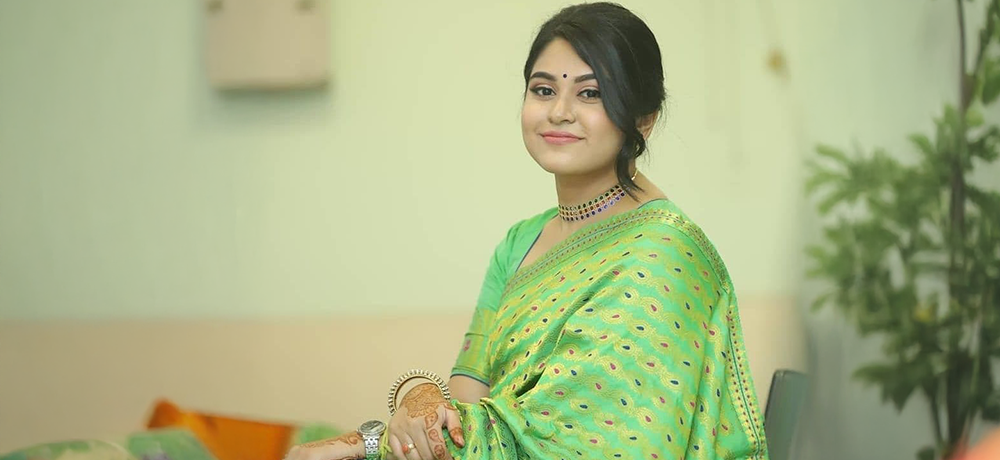
The courtyard that evening was dense with women. Someone had strung lights between the trees and the effect was warm and slightly unreal, everything in the radius of the lights made soft and amber, the darkness beyond them thick and complete. The mehendi artist moved between groups without rushing, her hands never still, the smell of henna mixing with rosewater and the perfumes of eighty women dressed for an occasion.

I was having my left hand done, sitting cross-legged on a low stool near the center of the courtyard. I had positioned myself to see the ceremony without being in the middle of it — this was a habit of mine, a preference for the vantage point over the center of things. I watched Sana being seated, watched the older women arranging themselves with the authority of people for whom these rituals are the coordinates of the world.
“Bhavna.”
Someone called my name. A woman’s voice, or a man’s — I couldn’t have said even then. It came from somewhere off to my left, from the direction of the garden wall, pitched to carry over the noise of the courtyard.
I turned.
Nobody was looking at me. The clusters of aunties nearest the wall were deep in their own conversations. A waiter moved through with a tray. Nobody waved, nobody beckoned, nobody claimed the call. At a wedding there are always three Bhavnas and someone is always calling one of them; I had half-decided the name belonged to somebody else when I saw him.
He was standing near the far wall of the courtyard. Not leaning against it — just near it, with a foot or two of air between his back and the wall, the way a person stands when they have arrived somewhere and have not yet decided what they are going to do next.
He was looking at me.
Not in the way men look at women across courtyards, the assessing look that pretends it isn’t one. He was simply looking at me, directly, with an attention so complete that for a moment I checked over my own shoulder to see what was behind me. Nothing was behind me.
Then the mehendi artist said something that required my attention, and when I looked back he was looking toward the ceremony, present in the way someone is present when they are thinking something they will not say to anyone in the room.
He was in a plain grey t-shirt and jeans. Not a kurta, not a sherwani, not even a collared shirt, nothing that suggested he had considered the occasion when he got dressed.
And he was fair, fairer than anyone else in the courtyard, a colouring that belonged somewhere else altogether. A foreigner’s face, or half a foreigner’s. He stuck out in the courtyard of women and carefully presented relatives the way a rest note sticks out in music. Not wrongly. Just unmistakably.
Nothing in his hands. No glass, no plate of snacks, no phone. Just his hands, loosely at his sides, doing nothing. That to me was odd. Who isn’t eating or drinking or talking at a wedding. Weirdo.
* * *
I caught Sana between arrivals, twenty minutes later, and nodded toward the far wall. “Who’s that?”
She glanced over with the divided attention of someone managing seventeen things. An aunty appeared at her elbow before she had fully focused. “I don’t know everyone Tarun invited,” she said, already pulled sideways. “Must be someone from his side.”
Then she was gone.
I looked back toward the far wall. The space was empty. He had moved without my noticing — no small thing, given that I had been watching.
Must be someone Tarun invited. I assembled the explanation myself and found it sufficient. People drift at weddings. Walls are temporary. I went back to watching my hand being worked on, the artist building out from the center of my palm in spirals that she seemed to be inventing as she went.
What I did not do was ask Sana again. I had a second opportunity, and I had a third, and I did not take either. I told myself I didn’t want to seem fixated on a stranger at my best friend’s mehendi. But the truth is simpler: I had already decided I would find out for myself.
* * *
Later that evening. The mehendi was drying on my palm, so I was holding my hand slightly away from my body, careful not to smudge three hours of work, and I had drifted toward the edge of the courtyard where the crowd thinned and the noise became ambient rather than immediate.
There was a loose group of people near the garden wall — the kind of cluster that forms at weddings when people who don’t know each other well enough for real conversation have been standing near each other long enough to feel that some acknowledgment is required. A cousin of Tarun’s I recognized. Two women I didn’t. A man from what I assumed was the Guwahati business community, judging by the cut of his kurta.
He was at the periphery of this group. His back to me, his head half-turned toward the man in the kurta, seemingly following the conversation — a listener at the edge of it, the way a planet is at the edge of a solar system. Technically part of the arrangement. Maintaining the orbital distance that keeps it from being something else.

Nobody turned to include him. Nobody addressed him. Nobody seemed to register him. Maybe being an outsider, a firang at an Indian wedding, he was used to not being included.
I watched this for a moment. Then I walked over and tapped his shoulder.
He turned immediately. Not startled. That was the first thing I noticed. There was no flinch, no reorientation of a person interrupted from a private thought. He turned as if he had been expecting a tap on his shoulder and had simply been waiting for it to arrive. His eyes found me with an ease that felt practiced, and then something in them sharpened into a focus that I was entirely unprepared for.
His features were mixed, Indian and something European, the two not quite resolving into each other, so that you kept looking to work out what you were seeing. He was not what I would call handsome in any conventional way. But there was something about his face — a quality of attention in it, a sense that the person behind it was fully present, fully interested in what was in front of him — that made conventional assessment beside the point.
“Hey, firang,” I said. “I’m Bhavna.”
“I know,” he said.

I stopped. The introduction I had prepared — the easy line about not having been introduced — dissolved somewhere between my brain and my mouth.
“How?”
“You already know.”
I looked at him. “Really? I don’t even know you.” I recovered enough to make it light. “What did you say your name was?”
“Roger,” he said.
I waited. No surname followed. He offered nothing else — no explanation of how he knew my name, no account of himself, nothing. He simply looked at me with that focus, a small smile arriving without announcement, as if the conversation were going exactly as he had expected it to go.
Someone at a wedding had said my name near him — that was all it could be. Names float at weddings; his ear had caught mine and kept it. It was the kind of trick confident men play, and I recognized it as one, and it worked on me anyway. I am telling you both halves of that because both halves are true.

“All right, Roger,” I said. “Since you know everything. What am I about to say next?”
“Something,” he said, “that gives you back the upper hand.”
I laughed before I could decide not to.
* * *
We talked. Or I talked, and he listened in a way that was so complete it functioned as participation: the kind of listening that creates space for the person speaking to go further than they intended, to say things they hadn’t planned to say, because the attention on them feels safe enough to warrant it. I noticed what he was doing — I am not someone who doesn’t notice — and I kept talking anyway, because I was curious about where it would go.
He started walking after a few minutes, no particular direction, just slowly, away from the group and along the edge of the garden. I walked with him without making a decision about it.
He mentioned having just arrived. His accent was Australian, clearly and easily Australian, the vowels of a man raised a long way from here. But underneath it, if you knew what to listen for, was something else, faint and warm, that Sydney alone could not account for.
“Where are you from?” I asked.
“Sydney.” He said it without nostalgia or apology, just information. “My mother’s family is from Kolkata. I spent a few summers there as a boy. Otherwise Sydney, all my life.”
That explained the thing under the accent — Kolkata, left in the sound the way a first language leaves its residue in a second. It explained the face too, or seemed to: an Australian father somewhere in the picture, a Kolkata mother, the two halves worn together without comment.
He was somewhere in his late thirties, I thought. There was nothing in his face that confirmed it, and nothing that contradicted it either. He had the look of someone who had not been ageing in the ordinary way — not preserved exactly, just not accumulated.
* * *
We had walked to the far end of the garden, where the lights from the courtyard didn’t reach and the darkness was genuine. The sounds of the wedding had receded to something ambient — voices, music, the low hum of a large group of people being happy. The air here was still and smelled of something blooming that I couldn’t identify.
I was talking — I don’t remember what, something about Sana, something about the journey from Imphal — and a lock of hair came loose from where I had pinned it and fell across my face.
He reached over and moved it behind my ear.
He did it without asking, without hesitating, the way you do something when it simply seems necessary and the asking would be the stranger thing. His fingers barely grazed my cheekbone — cooler than I expected, cooler than the warm still evening should have allowed, and I registered it and set it aside, the way you set a small thing aside when a larger thing is holding your attention. Night air. He was looking at me when he did it, with the slight smile that seemed to be his default expression for things he found worth his attention.
“Don’t distract me,” he said quietly.
I stood very still for a moment.
I did not pull away. I did not say anything. We kept walking, and the conversation resumed, and I told myself nothing had shifted. But something had. We both knew it. Neither of us named it, which was its own kind of acknowledgment.
* * *
“Who do you know here, Roger?” I asked him, later, when we had circled back toward the lights.

The pause before he answered was a fraction too long. Not evasive — something more like considered. “Weddings are beautiful, aren’t they? I couldn’t say no to the invite. The last time I was in India was also for a wedding.”
I noted that he had not answered the question. I noted it and chose not to press it. Something about his manner made pressing feel beside the point — as if the answer to what I was actually asking was available, but not through the route of asking it directly.
“You staying long?”
“If I knew, I’d tell you.” He looked at me steadily, and there was something in the look that was direct in a way the rest of him wasn’t, something that came from further in. “I’m just someone lost somewhere between Kolkata and Sydney, trying to find himself. Care to help?”
The words were easy, almost flirtatious. A line — I knew a line when I heard one, and this was a good one, delivered by a man who had clearly delivered good ones before. I let it be a line. It was a good evening for lines.
I noticed his watch during that conversation. Old, analogue, with a leather strap that had been repaired at some point and not recently: a small careful stitch near the clasp that someone had done by hand. The watch itself was nothing remarkable: a plain face, simple numerals.
What I noticed was the way he wore it. The dial facing inward, toward the inside of his wrist. The opposite of every other person I had ever seen wear a watch.
I noticed it and said nothing. It seemed like a small eccentricity, the kind of thing a person does without thinking about it and then does forever because it has become unconscious habit. A quirk. An affectation. Some men are like that with watches.
I filed it the way I had been filing him all evening — details without a framework yet, waiting for the framework to arrive.
* * *
Sana was luminous in the way that brides are luminous when they are happy and know it. In the morning she wore a Phanek Mayek Naibi with a gold border for the Meitei rituals — the traditional handloom wrap of Manipur, heavy and formal in the way of things that mean something. In the afternoon she changed for the Assamese ceremony, for Tarun’s family: a Mekhela Chador in deep gold silk. Two pieces, the upper portion draped and pinned at the shoulder, the lower wrapped and pleated at the waist. It is worn differently from a saree, has its own logic and its own formality, but carries the same quality that all occasion clothing carries when it is the right occasion: the sense of something that has been waiting to be worn.
I was in deep burgundy. Heavy gold earrings that had been my grandmother’s. Hair pinned up in the heat, though the heat was winning by afternoon.
The Juron was conducted in the morning — the formal Assamese welcome of the bride’s family to the groom’s. Betel nuts and gamosa cloth exchanged between the families, the older men and women moving through the ritual with the authority of long familiarity. The gamosa is not a towel in any ordinary sense. It is woven acknowledgment: white cotton with red borders, given to mark respect, to mark arrivals, to mark moments that the community has decided require marking. You give a gamosa the way you say a thing that matters. Carefully, with attention to the recipient.
The sacred fire was lit in the late afternoon, and I watched the smoke rise straight in the still air and felt the happiness of witnessing something that was going to last — two people choosing each other in front of everyone who mattered, in the way of their families, with the weight of it understood and accepted by all parties.
Roger was there throughout. I was aware of him the way you are aware of a sound that is just at the edge of audibility — present, noted, never fully in focus. He moved through the day as he had moved through the evening: slightly apart, slightly outside whatever was happening, watching with that quality of attention that seemed to cost him nothing and register everything.
* * *
It happened in the hour between ceremonies, when guests were moving between spaces and the formal program had given way to the informal milling that weddings require — people eating, talking, rearranging themselves from ceremony configuration to reception configuration, finding each other across rooms.

I was near the mandap area with a friend from Sana’s college years. The mandap had been constructed and decorated with marigolds and jasmine and lengths of silk in saffron and red, and against the far edge of the flower arrangement someone had propped a large decorative mirror — full-length, framed in brass, slightly angled, the kind that appears at weddings so guests can check their presentation before entering the ceremony space.
I had registered Roger behind me, some twenty feet back, standing in his characteristic way near the edge of a group he wasn’t part of. My friend was talking about something — the food, I think, or the music for the reception — and I was listening, or most of me was listening.
On instinct, mid-sentence, I glanced into the mirror to find him.
He wasn’t in it.
I looked at where he should have been — his position relative to mine, the angle of the mirror, the geometry of it. He should have been there. He was close enough, and in the right line, and the mirror was large. He should have been visible.
I turned around. He was standing exactly where he had been. Same distance. Same position. Same grey t-shirt. Looking toward the ceremony.
I looked back at the mirror. Looked at him. Looked at the mirror.

I had looked too quickly. The angle was wrong, or I had caught the edge of the frame, or he had moved for a fraction of a second at the exact moment I looked and then returned to his position. These were the explanations I assembled in the three seconds I gave it before my friend said my name and the ceremony drew my attention back and I let it go.
I let it go completely.
* * *
The reception wound down the way good receptions wind down — reluctantly, in stages, with people finding reasons to stay a little longer at each stage. By eleven most of the guests had gone. What remained was the core: family, close friends, the people who didn’t need a reason to be the last ones.
I had drunk enough to feel warm but not enough to feel reckless, which is a state I tend to prefer. I slipped out of the garden through a side gate and found the edge of the property, where the lawn ended and the trees began — mango trees, old ones, their roots surfacing from the ground in knuckled ridges. Beyond them, the sound of the Brahmaputra. Not visible from here, just audible, the low constant sound of something very large moving without urgency.
The dark was real dark. Not the orange-tinged dark of a city night but genuine darkness, with depth to it.
He was there, at the edge of the trees. Of course he was there. Men like him are always exactly where you’d rather they weren’t, at exactly the hour your defences are at their worst.
He turned before I reached him. I had made no sound — I was certain of this, I had been moving carefully in the dark — and he turned as if he had heard something I hadn’t made, or as if he had known, before I arrived, that I was coming. His hand went briefly to his hair, a quick unconscious scratch, and then he was facing me.
“You found me,” he said.
There was a smile in it. Not surprised. As if finding were the expected outcome, as if being found were a thing he had been waiting for.
We stood close in the dark. The sounds of the wedding behind us, the river ahead, the dark mango trees making the specific silence of large things in the dark.
What we said to each other in those minutes I remember only in fragments. Something about the river. Something about the distance between where I was from and where he had been. The conversation was not important in itself — it was a surface we were both moving across while below it something was happening that neither of us named.

He kissed me. Or I kissed him. I have replayed this moment more times than I can count, with the specific intention of determining who moved first, and I cannot do it. The memory is entirely clear — the warmth of him, the sound of the river, the smell of the garden — and the sequence is not. It began, and that is all I can say with certainty.
He kissed the way he listened. With full attention. Nothing performed, nothing accidental, nothing done for effect. As if there was nowhere else to be and nothing else that required his presence and he had made a decision about this that he did not intend to half-commit to.
I felt something I had not felt before, which is a thing people say and rarely mean, and I mean it in the precise sense: the particular quality of this — the completeness of his presence, the sense of being the only thing in his field — was not a feeling I had a previous instance of to compare it to.
I stepped back first. Not away — just enough to look at him clearly.
I took his hand, turned it palm up. Traced my hotel name and room number on his palm with my finger first — just pressure, teaching his skin the shapes before the ink.
Then I found a pen in my purse, because I am a woman who carries a pen, and I wrote it in ink, pressing with the deliberateness of someone who does not want to be misunderstood.
“See you at ten,” I said. “This is not over.”
I walked back through the gate and across the garden toward the lights. I did not look back. Not because I wasn’t tempted, but because I had already made my decision and turning around to check it felt like a small betrayal of it.
Behind me: the river, the dark, the mango trees.
His palm with my number written on it in a hand I recognized as mine.
* * ** * *
He knocked at ten exactly. I heard it and felt it at the same moment, a knock that was neither tentative nor demanding, just present — the knock of someone who had said they would come and had come and was not performing anything about the arriving.
I opened the door.
He was exactly as he had been all evening. The grey t-shirt. The jeans. The watch with the dial turned inward.
He had not gone back to a room somewhere and changed, had not made preparations, had not refreshed or reconsidered. He had simply come, as he was, because I had asked him to.
I took his hand to pull him in and instinct — some reflex I couldn’t account for — made me turn it over as I did.
My writing was gone. Not smudged, not faded to illegibility. Gone, as if the palm had been washed clean, as if nothing had ever been written there.

I looked at his palm for a moment. Then at his face.
“Clean freak?” I said.
“Habit,” he said. Something in his eyes when he said it that I couldn’t place.
I thought: he had better not be this clean when I’m done with him. I didn’t say it. I pulled him in and kissed him instead.
For one breath he let me lead.
Then his hands closed on my waist and he turned us, and my back met the door, and the man who had spent an entire wedding standing quietly at the edges of things stopped being quiet.

He kissed me like a man who had decided.
His hands moved with intent, my jaw, my throat, the zip of my dress drawn down in one pull, the fabric peeled off my shoulders and left where it fell.
He unhooked my bra one-handed and filled his palms with my breasts and I heard the breath leave him, and then his mouth was on them, hungry, unhurried, both at once, which should not be possible and was.
He took my wrists. Both of them, in one motion, and pinned them above my head against the door. Not hard enough to hurt. Hard enough to mean it. He looked at me while he did it, reading my face for the answer.
“Tell me to stop and I stop,” he said, low.
“Don’t you dare.”
At the place where my neck met my shoulder he bit down, not gently, and I made a sound I hadn’t planned to make. He soothed it with his tongue and did it again, harder, and I arched off the door into him.
He walked me to the bed and put me down on it, not roughly and not gently either, and stripped the last of my clothes off me, and knelt, and hooked my knees over his shoulders.

Then he put his mouth on my pussy like a man claiming territory.
There was nothing polite in it. He licked me open and held my hips down when they bucked, tongue and teeth and two fingers curling inside me, relentless, and when I grabbed his hair he growled against me and did not slow down. I should say this plainly:
I keep the upper hand in bed. I always have. I direct, I pace, I decide. There was no deciding anything here.

He ate me through my first orgasm and straight past it, through my swearing, through my thighs shaking around his ears, until the second one hit and I had to jam my wrist against my mouth to keep the hotel out of our business.
The second time around, my pussy did something it had never done before. It erupted like a fountain, flooding his mouth and covering his face in my juices. He stayed and drank me. I kept coming and he kept drinking till I had nothing left to give.
He rose over me, wiped his mouth on the back of his hand, and looked down at what he had done to me.
“Roger,” I said. His name, just his name, wrecked.
“I’ve been thinking about this since you tapped my shoulder.”

“Good,” I said. “Then stop thinking.”
He pushed into me in one long stroke, all of him, and stilled there, seated deep, watching my face while my body caught up to the size and the fullness and the fact of him.
“Don’t stop,” I said.
He didn’t.

He fucked me the way he had promised somebody something, though I could not have put it that way then. One hand fisted in my hair, the other gripping my hip hard enough to leave marks, deep and driving and certain, a rhythm that claimed rather than coaxed.
Nothing performed in it. No show made of the roughness. A man taking what had been offered with the full weight of his attention, and the attention was what undid me: even claiming me he was reading me, finding what my body answered to and staying on it without mercy.
“Yes,” I said. “There. Harder.”
He gave me harder. I gave him sounds I have never given anyone. Whatever part of me usually stands aside and observes had left the room entirely, and I surrendered, and the surrender itself was a pleasure I had no previous entry for.

The orgasm arrived like something aimed, central, starting where it started and going through all of me, and I turned my face into the pillow and screamed into it.
He kept moving through the aftershocks, slower, letting me feel each one, and before they had subsided I felt the pressure rebuilding.
How, I thought, and did not finish the thought.
He turned me.

Pulled my hips up, entered me again from behind, his body curled over mine, one hand splayed flat between my shoulder blades holding me down against the mattress, and I gave up the last thing I was holding.
His other hand worked me from below with the same ruthless patience he brought to everything, and the second time was longer and deeper, and at the end of it, at the exact moment everything contracted and released, something came out of me that I had not planned or considered.
Ahing.The Meitei word for breath. For life.
Surfacing from somewhere below the level where decisions are made, from the place in the body where the oldest things are stored. I heard it leave me and could not have said where it came from or why.

He paused — just a fraction of a second, not stopping, just registering. He didn’t ask what it meant.
He held me through the last of it and came himself shortly after, with his face at my throat and his arms tight around me, and even that was unhurried, even that had the quality of full presence.
I could feel his thick hot cum flood me and it kept coming, wave after wave, for what felt like an eternility, filling me.

Afterward we lay without speaking. The Brahmaputra, somewhere in the dark outside, doing what it had always done.
“Tell me something true,” I said, eventually.
He was quiet for a moment. Long enough that I wondered if he was going to answer at all.
“The moment I heard your name, I knew I was here for you,” he said.
“Try again.” I said mock slapping his arm and blushing at the same time.
“No,” he said. “It’s the truth you asked for.”
I thought about asking what he meant. I decided I knew well enough, and that asking would require him to say it in words, which would make it into something it wasn’t yet. I let it be what it was.
We didn’t sleep for another three hours, till my pussy fed him another squirting orgasm and took two more loads of his cum.

I woke alone.
The other side of the bed was smooth. Not the smoothness of someone who has left a warm impression and gone — that rumpled, still-warm smoothness of recent absence. Just smooth. The smoothness of a surface that has not been slept on.

I lay looking at it for a moment.
The room was as I had left it before he arrived. A glass of water on the nightstand on my side. My shoes near the door. The lamp I had not turned off, its low light now insufficient for the morning that had come through the curtains.
His number was in my phone. I had entered it myself, lying in the dark in the middle of the night, reading the digits from his lips one by one. Or I believed I had. The number was there. I had no reason to doubt the memory.
I dressed. I covered the mark on my collarbone with the drape of my dupatta, positioning it with care. I went down to the farewell lunch and ate and talked and held Sana for a long time before I left, and I smiled at every right moment and meant everything I said about a beautiful wedding and two people who were clearly going to be fine.
On the train back to Imphal I sat at the window and watched the valley close back up and the hills return and I thought: something happened. I thought it very carefully, the way you think something when you are not sure yet what category it belongs to.
Something happened.
* * *

I messaged him the day after I returned. Light, no pressure — the kind of message that says I am thinking about you without using those words, that leaves all the exits open while making clear which one I was hoping he’d use. Something about the train ride, something about the jolpan. Easy. Deliberately easy.
Nothing.
A week. I told myself he was traveling. Sydney, after all, was a long way, and long flights disorient, and perhaps he needed time to land. I told myself the number had come through incorrectly, that I had misread a digit in the dark. I told myself reasonable things and almost believed them.
I called. It rang — I want to be precise, because I checked, because checking is what I do — it rang the way numbers ring when they exist and are simply not being answered. I called twice more over the following week, at hours chosen to be casual. It rang out each time.
A month. I stopped.
So that was what it had been. A man at a wedding, a good line, one night, and a number he never intended to answer. I had been someone’s very pleasant evening. Women more careful than me have been made fools of by less, and I had walked into it with my eyes open and my own pen.
I am too proud to chase and too self-aware to pretend I’m not. I deleted the thread. I did not delete the number. There is a difference between those two acts and I knew it when I made them, and I made them both deliberately: the deleted thread was self-respect, the preserved number was something else. I kept it the way you keep something you can’t account for. Because throwing it away seemed more dishonest than holding it.
THE DESI

My father’s full name is Tomba Laishram, and he was a senior IAS officer for thirty-two years before his retirement, and in those thirty-two years he sat across tables from ministers and secretaries and commissioners and developed a set of instincts about human behaviour that had nothing to do with bureaucratic procedure and everything to do with watching people carefully for a very long time.
He retired to Imphal and to me — I had come back after my MBA, taken a position at a regional finance firm, and bought a flat two streets from his house, because we both preferred proximity without cohabitation. He cooked on Sundays. I went over. We ate and talked about things that were not what we were thinking, the way families do, and it worked because we both understood the code.
He noticed I was quieter after Guwahati. He said nothing about it for two months. He is a man who understands that some information needs time before it is ready to be spoken, and that pressing before it is ready produces noise rather than signal.
He poured my tea and sat across from me and was present in the way that people are present when they have known you your whole life and have no agenda other than your wellbeing. I did not tell him anything that winter. He did not ask.
I thought about this afterward — about how much it cost him not to ask, and whether it cost him anything at all, and whether the not-asking was a form of love so complete it had no need to announce itself.
I still don’t know. I never asked him either.
* * *
He left very little. That was the thing I returned to, in the months of silence, when I was being honest with myself — which I tried to be, because dishonesty about feeling is a particular kind of waste that I have never been able to afford.
He left: the mark on my collarbone, which lasted two weeks. The memory of a quality of attention I had not previously encountered and found I could not stop measuring other things against. The word Ahing, which I had said without intending to and which now felt different in my mouth — charged in a way it hadn’t been before, as if saying it had changed its weight. The image of his face at the exact moment he came, eyes open, on me, watching.
These were not enormous things. A bruise fades. A memory, given time and ordinary life, should also fade.
This one didn’t. I would be doing something ordinary, reviewing a client file, choosing vegetables at the market, sitting through a meeting about quarterly projections, and I would register, sharp as something new, the weight of his hand at the back of my neck. The sound he made when I touched him. The feeling of being looked at by someone who was genuinely looking.
I am a precise person. I know the difference between infatuation and something else. I sat with the question of what this was and arrived at an answer I didn’t entirely like: it was not that I had fallen for him. It was that he had shown me something was possible that I had not known was possible, and the knowledge of that possibility did not go away simply because he did.
This is its own kind of loneliness. I do not recommend it.
He had given me one evening and one night, and he had taken considerably more than that with him when he left. That is not romance. That is a man walking away with far more of you than one night entitled him to.
* * *
Three months after Guwahati. I was in my kitchen on a Tuesday evening cooking Eromba, which is fermented fish and vegetables, ngari and potatoes and green chillies, cooked down until everything has given up its own flavour and become one pungent thing. The smell of it is irreplaceable in the way the smells of childhood are always irreplaceable — not pleasant exactly, to the uninitiated, but dense with association, dense with the texture of what home means.
A neighbour was burning something in their garden. Wood smoke drifted through my kitchen window and combined with the ngari and something unlocked without warning.
Guwahati. The dark. The mango trees and the sound of the river and his hands.
I stood at the stove stirring nothing for a full minute. The eromba needed attention; I was not giving it attention. I was somewhere else completely, in a way that had nothing to do with choice.
Then I blinked and turned the heat down and went to the window and breathed the smoke until the image lost its edges and became manageable again. I went back to the stove. I finished the cooking. I ate at my table and read the news on my phone and went to bed at a reasonable hour.
I was very good at the ordinary life. I had always been good at the ordinary life. I am telling you this so you understand that what happened later was not the result of a person who had never learned to be sensible. I am a sensible person. Sensible people are not immune. That is something nobody tells you clearly enough.
* * *
The mark faded after two weeks. I found myself touching the space where it had been — not consciously, not as deliberate remembrance, but as a habit my hand had developed without consulting me. In the shower, sometimes, the hot water running over my shoulders, I would press my fingers to the spot and feel the ghost of pressure there, the memory of something specific enough to have left a mark.
One evening I stayed in too long under the hot water, chasing something I couldn’t name and knew I wasn’t going to find in a bathroom in Imphal. I turned the temperature down hard — cold enough to force a decision — and stood in it until the feeling had no choice but to leave.
I got out. I dried off. I called Sana and asked about the honeymoon.
She told me about Bali. She described the food and the light and Tarun’s face the morning they woke up to the sound of the gamelan from somewhere down the hill. She was happy in a way that had settled into something sustainable, something that was going to last. I listened and felt something for her that was entirely genuine and also, somewhere below it, something complicated.

I didn’t examine the complicated thing. I said goodnight and went to sleep.
* * *
Six months after Guwahati. Sana had moved to Guwahati with Tarun after the wedding, and I visited in November for a mutual friend’s dinner — Priya Kalita, who had been Sana’s college roommate and hosted dinner parties with the aggressive warmth of someone who has converted entertaining into a spiritual practice.
The dinner was at Priya’s apartment, which was on the seventh floor of a building in Uzanbazar and had a terrace from which you could see the river on clear evenings. There were twelve of us. I knew Sana and two others. The rest were the gravitational field of Guwahati’s young professional class — engineers, a lawyer, someone in media, a man from Assam’s tea industry whose family name I recognized from labels.
I had been talking to the lawyer for twenty minutes about something I was genuinely interested in — a recent land rights case — when the tap came.
On my shoulder.
The thought that arrived before I had processed the physical sensation was: Roger.
It arrived complete and immediate, reflex rather than association, the tap on a shoulder carrying the memory of a tap on a shoulder, six months ago, in a Guwahati courtyard. Which told me something I did not enjoy learning: that six months of sensible living had not moved him one inch from where he sat in me.
I turned.
It was not Roger.
It was a man I had never seen, hand extended, smiling with the easy confidence of someone who introduces himself at parties without requiring an invitation to do so. As I registered that it was not Roger — as that flash of anticipation resolved into the neutral fact of a stranger — two things arrived almost simultaneously, each through a different channel, each reaching me before I had finished processing the first.
His watch. Dial facing inward. The same worn leather strap, or near enough. The same turned orientation.
His cologne. Not the same as Roger’s — I would not have confused them, I have a precise olfactory memory — but the same warm woody base note underneath whatever sat on top of it. Close enough that my body registered it as familiar before my mind had confirmed that it wasn’t.His cologne. Not the same as Roger’s — I would not have confused them, I have a precise olfactory memory — but the same warm woody base note underneath whatever sat on top of it. Close enough that my body registered it as familiar before my mind had confirmed that it wasn’t.

I shook his hand.
“Nihal,” he said.
“Bhavna.”
He had a good face. Clear eyes, a jaw that suggested he spent time outdoors. Something open about his expression, uncomplicated in a way that was not the same thing as simple. He looked at me the way a person looks at someone they have decided they want to know better.
I let the moment be what it was. I did not tell him what I had thought when he tapped my shoulder. That was not information that needed to exist anywhere outside my own head.
* * *
We talked through most of the dinner. He was seated three chairs away and found reasons to extend conversations in my direction, which I found transparent and not unpleasant. He was quick without being sharp — the wit of someone who has learned to be funny without needing to win, which is a kind of social intelligence that I have always found attractive.
He asked good questions and listened to the answers, which is rarer than it should be. He did not perform interest. He was simply interested.
We were talking after the main course — about Loktak Lake, which I had mentioned in the context of something else, and which he had never seen — when my hair fell across my face.
Before I had registered it, before my hand had begun to move, I heard myself say: “Don’t distract me.”
The words arrived in my mouth from somewhere I had not sent them. They carried the warmth of a garden in Guwahati, a dark evening, a hand that was not my own, and they were out before I could weigh them.
Nihal blinked. Then he laughed, the genuine laugh of someone caught off guard in a good way. I laughed too, making it light, covering the moment with the social fluency I had developed over years of needing it.
But I had felt it. The thing that had surfaced had surfaced quickly and was gone, and I was the only one in the room who knew what it was, and I held that knowledge carefully and said nothing about it.
Going home that evening on the late bus, I sat with it. Examined it. Turned it over.

Then I went to sleep.
This was a decision as much as anything else. A choice to let the ordinary life be ordinary, to not pull at the thread, to keep the filing system intact.
Nihal called two days later. And then the filing system became, slowly, irrelevant.
* * *
He called on a Thursday, at a reasonable hour, and asked if I wanted to have coffee. I said I was in Imphal. He said he knew, and that he had been thinking about visiting Imphal, and that if I was willing to recommend somewhere decent to drink coffee that might help him decide.
I told him three places. He visited a month later.
This was the character of his pursuit: steady, unhurried, never pressuring, always present. He did not flood my phone with messages. He did not make his interest into a performance of intensity. He simply kept appearing, at intervals that felt considered rather than strategic, with the consistency of someone who had made a quiet decision and was allowing it to unfold.
The first visit was coffee and then dinner and then a long walk along the lakeside where we talked until the last of the light was gone and the lamps came on and neither of us had suggested stopping. He was from Guwahati originally — born there, educated partly there and partly in Delhi, now running his family’s logistics business across the northeast.
He had a younger sister who was a doctor in Shillong and a mother who, by his account, held opinions about everything with the confidence of someone whose opinions had historically proven correct.
“And your father?” I asked.
“Quiet man,” he said. “Spends most of his time in the garden now. Grows tomatoes he’s very proud of.”
“My father grows nothing,” I said. “He reads case law for pleasure.”
“We should introduce them,” Nihal said. “They can both be quietly baffling in each other’s company.”
I laughed. Genuinely, without managing it.

His second visit was six weeks after the first. He brought loose-leaf single-estate Assam tea for Tomba, unprompted, from a producer in the Dooars that had been mentioned in passing during the walk, something I had barely registered mentioning. He had remembered it and acted on it without announcing the intention. Tomba received the tea with the expression he uses for things that have surprised him in a way he approves of, which is not quite a smile but is the nearest he gets to one.
“Stay for dinner,” Tomba said.
Nihal stayed. He and Tomba talked for three hours about water management in the northeast, which was apparently a subject of mutual interest, and I sat at the table and watched my father be engaged in a way I had not seen him engaged since before his retirement, and I understood something.
I understood that Tomba had made a decision. He had not said so. He would not say so. But the invitation to dinner and the three hours of genuine conversation were the loudest statement he had available to him, and he had made it.
I drove Nihal to his hotel afterward. At the door he said: “Your father is remarkable.”

“Yes,” I said.
“You’re a lot like him.”
I looked at him.
“That’s a compliment,” he said, quickly.
“I know it is,” I said.
He kissed me then, for the first time — careful, asking, waiting for my response before committing to it. I responded. He smiled into it, just a little, the way people smile when a thing they have been hoping for has happened exactly as they hoped.
Roger did not disappear from me in that moment. I want to be honest about that. But something shifted. He became a thing I was carrying rather than a thing that was carrying me. There is a difference. I was grateful for the difference.
* * *

By the third visit Nihal had taken to Imphal in the way people take to places that suit them — exploring neighbourhoods, learning where to eat, developing opinions about which routes were better in the evening traffic. He asked about Loktak Lake with the curiosity of someone who wants to understand a place rather than photograph it.
I took him on a Sunday afternoon. We drove out in the late morning and walked along the eastern bank where the phumdis were thickest, the floating islands drifting in the shallow water, their ecosystem visible on close inspection — birds perched on them, reeds growing from them, the matted vegetation dense and self-sustaining in the particular way of things that have figured out how to survive without needing to be fixed in place.
I had gone ahead to the car to retrieve my sunglasses. He had stayed at the bank. When I came back along the path, approaching him from behind, he turned before I reached him — before I had spoken, before my footsteps on the dry grass should have been audible at that distance. His hand went to his hair, that quick unconscious scratch. He was facing me when I arrived.
“You found me,” he said. And smiled.
I stopped.
The phrase landed with a weight it had no business landing with on a Sunday afternoon at a lake in Manipur. I stood on the path and felt it — the echo of it, the exact words, the same tone, the same small smile — and something moved through me that I could not entirely contain.
“What?” he said. He had seen something in my face.
“Nothing,” I said. “Reflection on the water. Hurts my eyes.”
I put my sunglasses on. We walked. He took my arm at some point and I let him keep it, and the afternoon was warm and the phumdis drifted and I was almost entirely present.
Almost.
* * *

After that we stopped circling. The visits became monthly, then more than monthly, and in between them he was simply, reliably there.
When my quarter-end collapsed into a weekend of work, he moved his own board meeting and flew in with a bag of food and sat in my flat reading while I worked, wanting nothing except to be in the same room.
When Tomba mentioned a book, it arrived. When I mentioned nothing at all, he noticed that too, and asked, and listened to the answer.
I kept waiting for the performance to slip, for the effort to show its seams.
It never did. It was not effort. It was just him.
The fourth visit, I cooked for him at my flat, and after dinner I took the plate out of his hand and put it down and kissed him.

The way he kissed me back was almost like asking permission, and in reply, I led him to my bedroom, kissing him all the way, tearing his clothes off his body. And that was the first time.
He undressed me slowly, kissing each new piece of skin as the cloth came away, and when I was bare he looked at me for a long moment with an expression that had no strategy in it at all.
“Come here,” I said.
“In a while.”
He laid me back and started at my throat and worked his way down, unhurried, thorough.

He kissed my breasts and sucked my nipples lovingly until I was pulling at his hair.
He kept going, down my belly, and settled between my thighs like a man with nowhere else he would rather be.
He kissed me all over the inside of my thighs. I tried once to guide him to my pussy and he obliged.

He wrapped his arms under my thighs and tis tongue entered me.
He was patient and generous and paid attention, learning what changed my breathing and returning to it, giving and giving.
He sucked my clit, drove his tongue in and out of me, tasting my wetness and returned to my clit.

He built me by slow degrees until I came against his mouth with my heels pressed into the mattress, and he gentled me through every wave of it.
He kept eating me till I came down from my orgasm and my body stopped shaking.
Then he spread my legs and positined himself at my entrance, rubbing his cock against me, lubricating it with my release.

He slid into me, slow and deep, and made love to me with his eyes open, long unhurried strokes, adjusting to every sound I made, holding his own pleasure back as though it were the least interesting thing in the room.
I came again with my face in his neck, and only then did he let himself follow.
Afterward he tucked me against his chest and I lay listening to his heart slow.
He made love the way he had courted me, I thought. Unhurried. Generous. Me first, always, and himself almost as an afterthought.
A woman could build a life on being loved like that. I remember thinking it in exactly those words.

His Guwahati apartment on a Sunday in February, eighteen months after we met. The kind of day that arrives in Guwahati at the end of winter: warm enough for open windows, the air smelling of the rain that had come through the previous evening and left everything clean.
I had taken the early flight. He was at the door when I arrived, in a t-shirt and the loose trousers of a man who had been very productively doing nothing all morning.
He kissed me before he said hello, a habit I had become fond of.
We spent the morning doing nothing in particular — the easy domestic nothing of two people who are comfortable enough together that being in the same space without agenda has become its own pleasure.
He made breakfast badly and I corrected it and he pretended to be aggrieved and then ate three helpings. We read. He worked on something for an hour and I sat on his balcony and watched the city and felt the quality of Sunday moving through me.
By early afternoon the day had that feeling — accumulated, warm, slightly electric.
The feeling that something is going to happen, though you cannot say what. I had felt it before in his company and had learned to trust it.

He kissed me in the kitchen, at the counter, tasting of the tea he’d been drinking. I kissed back and laughed a little into it and he pulled back to look at me.
“What?”
“You taste like builder’s tea.”
“I’ve been brewing it for forty-five minutes.”
“It shows.”

He kissed me again, and this time neither of us laughed.
We moved to the bedroom in the way that has its own grammar — unhurried, mutual, the small negotiations of bodies that know each other.
He undressed me with the attention he always brought to this, as if each piece of clothing removed was worth registering. I pulled at his shirt and he raised his arms and let me.
He was warm and solid and genuinely present, and I was entirely in the room with him — no shadows, no echo of anyone else. Nihal had a quality of presence that was different from Roger’s completeness but no less real: where Roger had been still and focused, like a lens concentrating light, Nihal was warm and encompassing, like a room at the right temperature. I had learned to understand this as its own excellence.

He laid me back and took his time. That was his way — his mouth moving down my body as though he had all afternoon and intended to spend it on me, settling between my thighs and staying there, patient and generous, one hand splayed warm across my belly, reading me and adjusting and in no apparent hurry to arrive anywhere himself.
He touched me with an ease that had been built over months — not assumption, familiarity, the knowledge of what worked between us. I moved under his hands and his mouth and felt the pleasure building in the particular unhurried way it built with him, like water rising in a vessel, steady and inevitable.

We moved through positions with the casualness of long practice. When he finally slid into me it was slow and deep and easy, and he held himself so he could watch my face.
He was generous without being mechanical about the generosity — pleasure-giving as something genuine rather than something he was tracking.

I was close, and building, and my hands were in his hair and I was saying his name with the regularity of something that had become involuntary—
“Marry me.”
I was in the middle of yes, in the deep physical yes of approaching orgasm, when the words resolved into language.
“What?”
He was grinning. I could feel it even from the angle I was at.
“Gotcha,” he said, and kept going.
I would have hit him. Both my hands were occupied. I said several things in rapid succession in three languages, none of them complimentary
He said “shhh” with the completely unearned serenity of a man who believes he is about to be forgiven for everything, and then made good on everything I was about to forgive him for.

I came with my face in his shoulder and his name in my mouth and the rage about the timing still present somewhere in the back of it, which is an experience I recommend.
I was at the peak of my orgasm when his back arched and he pushed all the way into me and let go with a grunt, filling my pussy with his cum. I could feel his cock twitching inside me, till it stopped and started going limp.
Afterward. His arm across my stomach, both of us looking at the ceiling.
“What was that,” I said.
“A question,” he said.
“Were you serious.”
“No.” He sat up and reached for his boxers. “I’m getting water,” he said, and walked out.
I lay there. Something crestfallen moved through me that I had not anticipated — the small grief of a door that seemed to have opened and then hadn’t. It surprised me. I hadn’t known I was ready to hear that question.
I got up and wrapped the sheet around me and followed him, cursing him comprehensively.
The living room.
A cake on the coffee table. Marry Me in pink icing, slightly uneven. The television on, running a video of fireworks with the same words in aggressive cursive.

Nihal on one knee. Boxers. Ring between his fingers. On his face: the expression of a man balanced between nervousness and absolute delight, the kind of delight that comes when something you have planned has arrived at the moment you planned it for.
“Excuse the presentation,” he said. “I can get rid of these if it helps you say yes.” He indicated the boxers.
I dropped the sheet.
I ran to him.
“Yes,” I said. “You fool. Yes.”
He made a sound I had not heard from him before — something between a laugh and a sob, quickly contained.
He slid the ring onto my finger with hands that were not quite steady, and then he turned my hand over and kissed the inside of my wrist, just below the palm, where the veins run blue under pale skin. Unhurried. Deliberate.
Something moved through me at that. The geometry of it — the turned-over palm, the kiss to the inside of the wrist, the tenderness of that small reversal. I felt it and I let it be what it was, which was complicated and true at the same time.
“Yes,” I said again, quietly, to him and to whatever else was listening.

What followed was conducted largely on the floor, without the sheet, in the light of the television’s fireworks.
At one point I was laughing and he was laughing and the cake was on the table watching all of it with its crooked pink icing and we were both completely there. Then I was coming and he was coming in me.
Later, as we lay in a heap of sweatsoaked bodies, the realization dawned that I had just agreed to get married to a man who loved me. Did I love him? Did it matter? I dismissed the thought and kissed him
THE VOW
We set the date for the following winter. The pandit consulted his charts and produced an auspicious day that turned out to be the anniversary of Sana’s wedding — to the day. Sana was delighted by the symmetry and claimed partial credit for the marriage on the strength of it. My mother approved of the date because the pandit had. I told myself it was coincidence and convenience, and let it be both.

The engagement months were good months. And in the middle of them, six weeks before the wedding, I nearly ended it.
I want to be honest about how small the cause was, because the smallness is the point.
We were choosing between two banquet halls for the reception. I had a preference; he had a different one, mildly held. I made my case. He listened, agreed, and switched to mine without a fight. And something in me went white with a rage entirely out of proportion to a banquet hall.
“Don’t just agree with me,” I said.
He looked up, startled. “I do agree with you. Yours is better.”
“You always agree with me. You never—” I stopped, because I did not have the end of the sentence. “You never make me work for anything.”
“Is that a complaint?” He was smiling, uncertain, looking for the joke in it. There wasn’t one.
“I don’t know what it is,” I said, and that was the truest thing I said all evening.
But the thing had momentum now, and I could not stop it. I lowered my voice, because the hall was public and my grievance was not. “It’s the same in bed, Nihal. You give and you give and you give. You worship me. In two years you have never once just taken.”
He went very still. A caterer’s boy walked past with a ladder and we both waited him out, absurdly, two adults holding a live wire between them in a rented hall.
“Most men would be shot for less,” he said carefully.
“I’m not saying it’s a crime. I’m saying I never see you want anything. Not the hall. Not the menu. Not me. Wanting, Nihal. Taking. Where is it?”
He looked at me for a long moment, and something moved through his face that I had never seen there, and then it was gone and he was himself again, steady and warm.
“Then next time will be different,” he said. “I promise.”
I drove to my mother’s that night instead of home, and somewhere on the dark stretch past the bazaar I caught myself turning him over the way I turn over anything that will not balance.
Which was the real man, the giving or the promise to stop giving?
Men remake themselves for courtship all the time and unmake themselves inside marriage; every woman I knew had watched it happen to someone.
Maybe the sweetness was the costume he would take off after the fire. Maybe the promise was. I was six weeks from my wedding and I could no longer tell which man I was marrying, and everyone had a name for that, and the name was cold feet.
She was still up, because she is always still up, moving around the house in her nightclothes doing the small tasks that expand to fill whatever time is available to a woman who has never in her life sat down while there was something left to be done.
She is a small woman, my mother. She tops out at five foot two in her good chappals. She has white hair that she wears in a knot and glasses she is always either wearing or looking for and a voice that carries across any room regardless of the noise level in it.
She took one look at me and put the kettle on.
I told her. Not the banquet hall — the thing underneath the banquet hall, or as much of it as I could reach.
That he was too good. That there was no friction in him, nothing to push against, and that a life with no resistance in it frightened me in a way I could not name.

That I thought perhaps I did not love him the way a person should love the person they marry. That perhaps I was making a mistake I would spend thirty years inside of.
She let me finish. She poured the tea. She sat across from me at the kitchen table where I had done my homework for eighteen years, and when I was done she was quiet for a moment.
“So. You want to know what’s wrong with him,” she said. “That he loves you, and shows it, and doesn’t make you fight for it.”
“When you say it like that it sounds mad.”
“It is a little mad.” She said it without unkindness. “You have your father in you. Both of you the same — you don’t trust anything that comes easily. If it doesn’t cost you something, you think it can’t be real. Where do you think that gets a person, in the end?”
I didn’t answer.

“Water finds its level, beta” she said. “You put two people into one life and it isn’t level at the start. One gives more, one takes more, one is certain and one is frightened. But it finds its level. It always finds its level, if you give it time and you don’t run from it. What you’re calling a fault in him — that he’s steady, that he doesn’t make you bleed for his love — one day you will call it the thing that saved you.” She reached across the table and put her hand over mine. “Don’t throw away a good man who loves you because he loves you too plainly. That is not a reason. That is a girl looking for a reason.”
I sat with it.
“You think I should marry him,” I said.
“I think you already know you’re going to.” She took her hand back and picked up her tea. “You wanted someone to tell you it’s allowed to be this easy. So. It’s allowed. Now drink your tea before it goes cold, and stop frightening that poor boy in banquet halls.”
I drank my tea. Everyone had a name for what was wrong with me that winter, and the name was cold feet, and I let them use it because I had nothing better to offer.
I married him six weeks later, on the anniversary of Sana’s wedding, and I was glad, and I meant it.

The Luhongba preparations took over the house two weeks before the wedding, and my mother took over the preparations with the ferocity of a woman who has been planning this event in her head since roughly the year I turned twelve and now requires only the occasion to execute the plan that has been ready and waiting.
In the weeks before my wedding she moved through the house like a weather system — organized, relentless, warm when warmth served the objective and brisk when brisk was more efficient. Caterers who underestimated her based on her appearance did not make the same error twice.
My father sat in his study and read and drank tea and emerged periodically to be consulted on decisions that required his authority and then returned to his study. This was his mode of participation. It was, in its own way, entirely sufficient.
Nihal’s family arrived from Guwahati two days before. His mother was a large woman with a large laugh and the maternal energy of someone who has decided to approve of you and is conducting the approval loudly and at length. His father was quieter. The tomato grower, the quiet man.
He and Tomba found each other within an hour and spent the next several hours in the garden, talking about things I couldn’t hear from the kitchen window, and when I looked out and saw them there, two fathers, two different kinds of quiet, making their own arrangements, I felt something I did not have a word for.
* * *
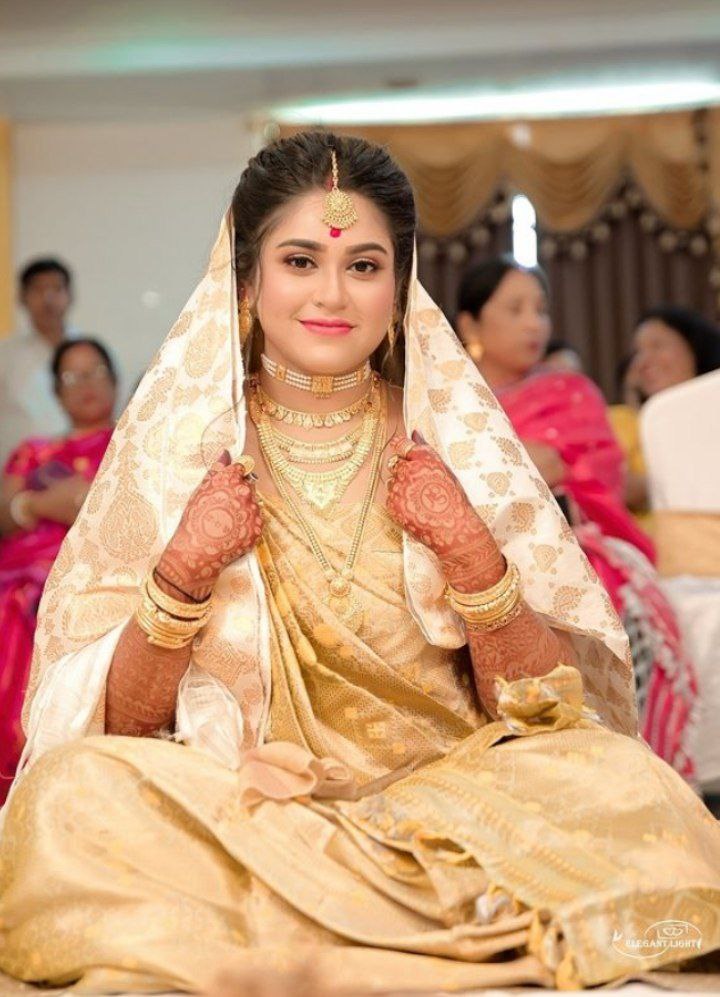
The morning of the wedding I put on the Potloi and understood something about ceremonial clothing that I had not understood before.
The Potloi is not worn; it is assumed. It is a structured cylindrical skirt, stiffened with materials that give it a rigidity that is nothing like ordinary cloth — it holds its shape because it is built to hold it, because the shape is the point.

It is worn only for the Luhongba. It is worn with the Mapal Naibi headdress and the heavy gold jewelry of the occasion. You do not move freely in a Potloi.
You move with the Potloi, which is a different thing — you learn to occupy it rather than to wear it, to let it hold the weight of the occasion on your body so that you do not have to hold it only in your mind.
My mother fastened the last piece and stepped back. She looked at me for a moment with an expression I have only seen on her face twice in my life. Then she blinked and became practical again.
“Stand straight,” she said. “Don’t look down at your feet.”
“I know,” I said.
“I know you know,” she said. “Stand straight anyway.”
The weight of it, when it was fully on, felt like something that had been waiting to happen. Not heavy in the sense of burden. Heavy in the sense of arrived.
* * *
I had woken that morning from a dream about Roger.
I want to be precise about what kind of dream it was, because precision matters here: it was not a dream in which Roger appeared as a symbol or a feeling or a vague presence.

It was specific. His hands. The river bank in Guwahati, the smell of the mango trees in the dark. Fragments assembling and dissolving and reassembling — the sound he made, the architecture of that night in the hotel room, the way he had held me down and the way I had wanted it, the word Ahing leaving my mouth without my permission.
I came in the dream. A real orgasm — not the pale, unfinished suggestion of one that happens sometimes in sleep, but the thing itself, my body fully present and fully involved in something that was not there.
I woke gasping, disoriented, the ceiling of my childhood bedroom assembling itself above me, the familiar cracks in the plaster, the light through curtains I had chosen at seventeen.
Everything was wet.
I lay there and looked at the ceiling and let my body come back to itself and understood what had happened, and felt, on the morning of my wedding, a many-layered anger directed primarily at myself. Not at him — being angry at him had long ago stopped producing anything useful. At myself, for carrying this still, for finding it in sleep when I had managed to keep it out of waking life with reasonable success for the better part of three years. For the timing of it. For the fact that my body, on the morning I was going to marry a man I had genuinely chosen, had chosen to remind me that the choosing had a history. A man takes one night from you and your body keeps paying interest on it for years. Nobody warns you about the interest.
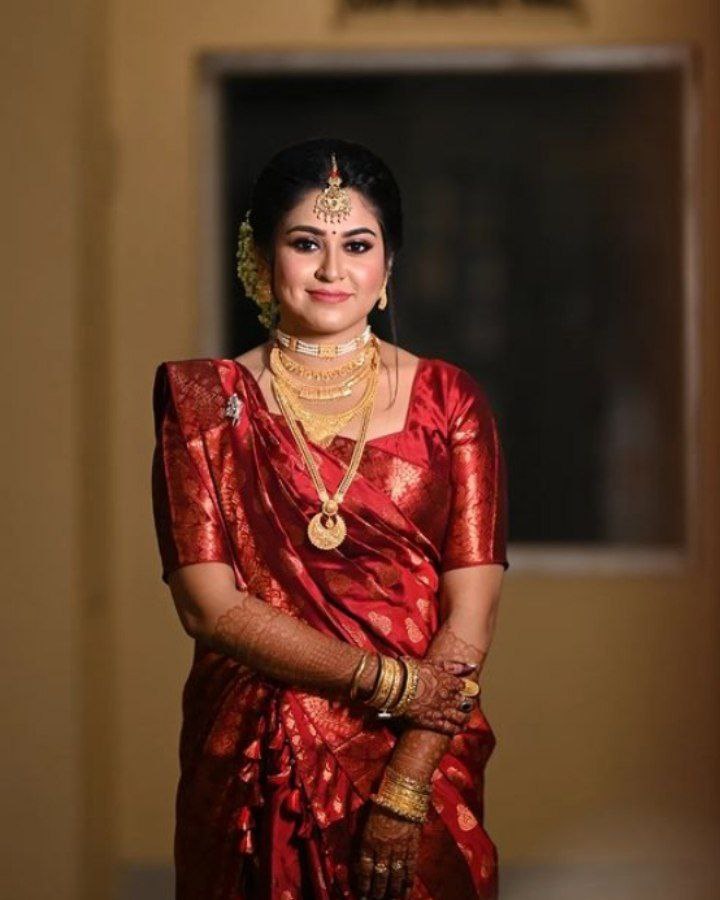
I showered cold. I washed my hair and dried it and came downstairs to my mother’s terrible efficient calm, and I did not think about it.
I tried not to think about it.
He was in my head. He had been in my head since the dream and he would be in my head all day and I knew it and I was furious about it and I got dressed anyway.
* * *
The evening before the wedding. The mehendi artist was working my palm for the second time in three years, adding to the existing design with the confidence of someone who has done this ten thousand times and has opinions about what the hand requires.
I watched her work. The patterns she made were intricate and deliberate — spirals and paisleys and fine-line flowers, building outward from the center in the way that these designs always build, from the most significant point expanding to fill the available space.
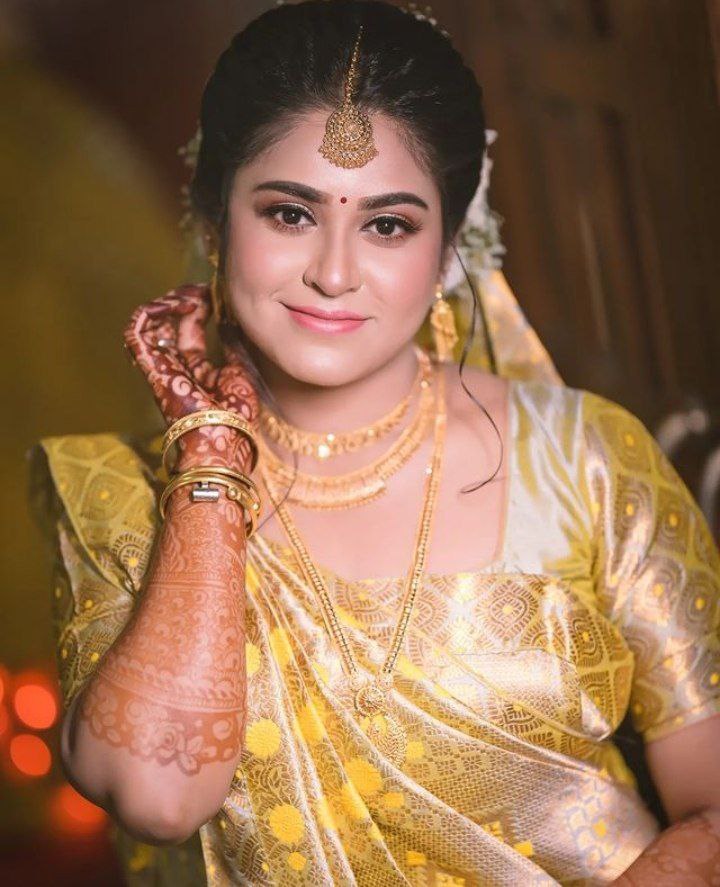
A shape formed in the center of my palm, unplanned — or not planned by me, whatever plan she was following was her own. It took me a moment to recognize it. The curve of it. The negative space it enclosed.
The river bank. The mango trees. The dark water.
I held very still. I closed my hand once, gently, not smudging. Opened it.
The shape was still there.
I let the artist finish.
* * *
The Luhongba. The sacred fire lit in the courtyard in the late afternoon, its smoke rising straight in the windless air. The guests arranged in the order that occasions of this magnitude require — family at the center, extending outward through degrees of relationship and affection to the furthest edge of the social circle.
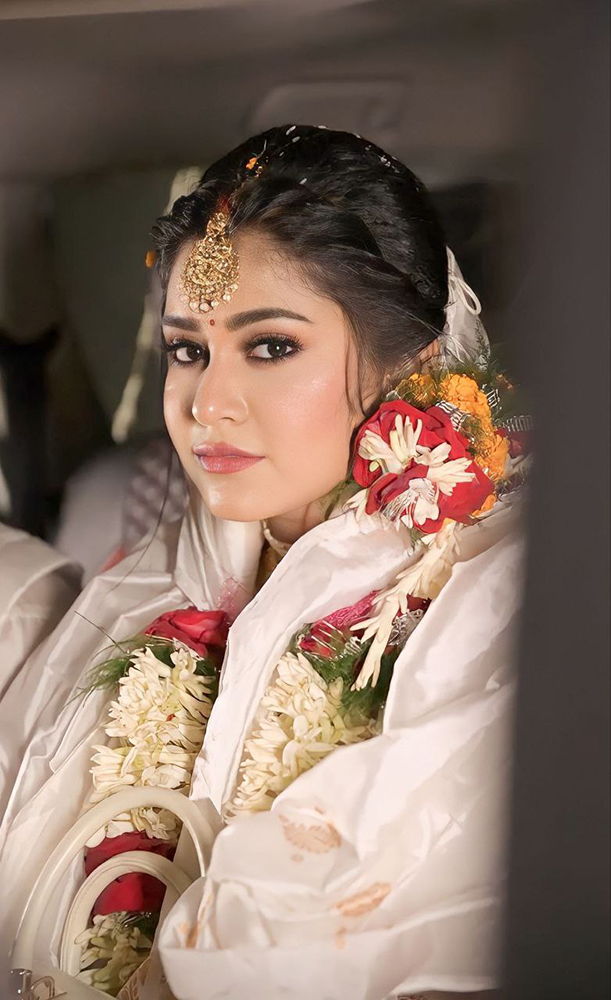
The Laihui is not simply a garland. I want to be clear about this for anyone who does not know: the Laihui is declaration. It is placed by the bride’s own hands — not received, given — and the placing of it is witnessed by the fire and by everyone gathered, and it is irrevocable in the way that only chosen things are irrevocable. Received things can be returned. Given things are different. What you give of your own will, witnessed by fire, becomes a fact.
I held the Laihui and felt its weight. I looked at Nihal’s face.
He was watching me with an expression I had not seen on him before — not the warmth I knew, not the easy delight, but something deeper and quieter, something that had no performance in it. He was here. Fully here, in this moment, and the expression on his face was the expression of a man who understood what was being offered and understood what he was receiving.
I placed the Laihui.
Then Tomba took my hand.
I had prepared for this moment. I had run through it in my head for weeks — the sequence of it, what I would feel, how I would hold myself through it. I am a person who prepares for things. It is how I manage them.
I looked at his face.

He had worn his best suit. He had polished his shoes. He was standing very straight in the way he stood when he was trying to be equal to something, and his eyes were bright with something he was not going to name, not here, not in front of everyone.
My preparation dissolved.
I held myself together for three seconds.
Then I could not.
He said nothing. He squeezed my hand once, precisely, and walked me forward. The fire was there. Nihal was there. The smoke rose straight in the windless air and the people who loved me were arranged around me and the evening was doing something extraordinary with the light.
I was crying and I was smiling and I let both things be true.
* * *
First: the reception hall. Two hundred people, warm with bodies and noise and the smell of flowers approaching the edge of their best. The band at the far end playing something that was Bollywood at its origins and had been transformed by the musicians into something with a Manipuri lilt underneath it, which I thought was exactly right.

I was in conversation with Nihal’s uncle — a man with strong opinions about infrastructure development whom I had been redirecting for ten minutes toward a topic I found less testing — when I saw him at the far end of the hall.
Near the wall. The way he always stood near walls.
The grey t-shirt. The particular way of standing that was not quite occupying the space, just being in it.
I moved toward him. A second cousin materialized from my left — could I, photograph, just one — I turned and smiled and turned back and the space near the wall held a table of gifts and nothing else. No person. No grey t-shirt. The table had been there the whole time.
I stood for a moment. The noise of the reception continued around me.
I told myself: a full hall and tired eyes and Roger in my head since four this morning because of a dream that was not his fault and not mine and did not mean anything beyond the fact that the human mind is not always cooperative about its timing.
And underneath the telling, something less reasonable: if that man had actually walked into my wedding, after three years of silence, I did not know what I would have done to him. I did not finish the thought. It was not a thought for a woman in a Potloi.
Second: during the ceremonial fire, toward the back of the gathered guests, where the crowd thinned and the lamplight didn’t quite reach. Slightly apart from the people around him in the way he was always slightly apart. Standing and watching the fire.

I turned my head fully, deliberately. Nobody.
Nihal’s hand found mine. He squeezed. I squeezed back and I looked at the fire and the fire looked back and I did not look toward the back of the gathering again.
* * *
The hotel suite smelled of tuberose — someone had thought carefully about the flowers, the sweetness of tuberose that stops just short of overwhelming, that rides the edge between pleasure and excess with perfect judgment. The room was white and warm and quiet.
Nihal poured two glasses of water and handed me mine and we stood at the window and looked at the city below, which was carrying on in the way cities carry on regardless of what is happening in the rooms above them. The lights of Imphal going about their business.
“How are you?” he said. Which was not a small question.
“I’m good,” I said. And I was. Not performing good — actually good, in the way of someone who has completed something significant and is present enough to register the completion.
“Good,” he said.

He set both glasses aside and kissed me. Slow, beginning where everything good begins — with full attention, with the intent to be thorough. His hands found the pins in my hair one by one, unhurrying, setting each one on the side table with a small click. My hair came down.
“There,” he said quietly. The way you say something you’ve been waiting for.
We undressed each other without haste. This was its own intimacy — not the urgency of the early months but something settled and mutual, the attention of two people who know what they are doing and have decided that the knowing is worth taking time over.
When I was fully in front of him, his eyes moved over me in the way they always moved over me, without performance, with unhidden pleasure.
“You are extraordinary,” he said. Simple. Not a compliment for the occasion — a fact he was noting.
I pulled him down.

He moved over me and through me with a slowness that I understood: this night was different and he knew it and he had decided to let it be different rather than treat it as the thing that followed every other night.
Conscious of itself. Aware of its own weight.
He laid me back against the pillows and kissed his way down my body, and I felt him decide to be thorough.

He parted my thighs and settled between them with a low sound of contentment, as though this were his wedding gift and he meant to unwrap it slowly.
He ate me the way he did everything, generous and patient and attentive, two fingers inside me and his tongue steady on me, reading me, building me by degrees.

I came with my hands in his hair and his name breaking in half in my mouth.
He gave me no time to come down. He moved up my body and slid into me while I was still pulsing.
He entered me and started moving slow and deep.

He made love to me with his eyes open and his forehead dropping to mine, unhurried, tender, murmuring things against my mouth that belonged to this night only.
The second orgasm built from a long way off and rolled through me for what felt like a full minute, and he followed me over at last with my name in his throat and his arms hard around me.
We lay in the tuberose dark, his heartbeat slowing under my ear.
“You broke your promise,” I said.

He laughed, low and unbothered. “I gave you two—”
“You promised different. That was not different. That was you on your very best behaviour.”
“We have an entire honeymoon ahead of us.” His hand traced my spine, lazy, sure. “It doesn’t come naturally, being rough with something I waited this long to be gentle with. But I’ll make the effort. I promise.”
He was asleep in minutes, the way happy men sleep.
I lay awake in the flower-heavy dark and took myself apart, because somebody had to.
Two orgasms on my wedding night, from a husband who wanted nothing on earth except to please me, and here I lay filing a complaint about the manner of their delivery.

What kind of woman does that.
Then it landed. Quietly, the way true things land.
I had not been left wanting more. I had been left wanting differently. Wanting weight. Wanting hands that gripped instead of held, a mouth that took instead of gave. Wanting to be claimed and owned, entirely, the way I had been claimed and owned exactly once in my life, three years ago, by a man in a grey t-shirt who threw me away by morning.
I scolded myself in two languages. It was the dream, I told myself. This morning’s dream, still in my blood, nothing more. A dream is not a verdict on a marriage.
I curled into my husband’s warmth and drifted off, unsure of myself, on the first night of my married life.
THE RETURN
Imphal to Kolkata. A night in Kolkata. Kolkata to Malé the next morning.
Nihal held my hand on both flights. On the second one I leaned into him and watched the Indian Ocean appear below us — a blue so saturated it looks invented, a colour that does not exist in any landlocked place, that requires this light over this depth of water to become possible. I watched it and registered, very deliberately, that I was happy.

This is what I was doing: tracking my own happiness. Noting it. Making it conscious, as if consciousness would make it more durable. I recognised this as a thing I did when I was worried about losing something. I was worried about losing this.
The resort was a collection of water villas on a promontory in the North Malé Atoll. Our bungalow was over the water directly — the ocean moving under the deck, visible through the glass panel in the floor of the living room, audible at night through the louvers. It was the kind of place designed entirely for two people to pay attention to each other, and it worked.
Dinner the first night was slow and easy. We ate and talked and watched the last of the light leave the water and I felt the accumulated tension of the wedding weeks begin to loosen in the warmth and the ease of him.
I can be happy here, I thought. I am happy here.
I went to sleep that night with his arm across my chest and the ocean under us and the clean salt air coming through the louvers, and I did not dream.
* * *

The sighting at Malé airport happened before we had cleared immigration. The crowd from the flight was moving in the compressed, luggage-burdened way of airport crowds, finding the queues, consulting phones for directions.
I saw the t-shirt ahead of me. Grey. Plain. Exactly that shade.
I saw the way the person wearing it moved — unhurried, slightly apart from the flow, not rushing toward anything.
I pushed through the crowd without deciding to. Murmuring excuse me, moving past shoulders, reaching for the shoulder ahead—
The man turned. Middle-aged, surprised, Southeast Asian, unconnected to anything I was looking for.
I apologized. Nihal appeared at my shoulder, hand at the small of my back.
“You okay?”
“Fine. I thought I saw someone I knew.”
He steered me gently toward the immigration queue. I let him.
I looked straight ahead at the queue and at the immigration booths and at the officers behind the glass and I did not turn around.
* * *
Third morning. The quality of light through the shutters at seven a.m. in the Maldives is unlike light anywhere else I have been — it comes in bars, precise and warm, with the particular brightness of light reflected off water in every direction, so that even the shadows in the room are not dark but merely less bright.

Nihal was awake before me and was lying watching me when I opened my eyes.
This was a thing he did — watched me wake up with the uncomplicated contentment of someone who is exactly where he wants to be. I had found this faintly unnerving in the early months and had since come to understand it as one of his forms of tenderness.
I reached for him first.
Morning sex with Nihal had its own particular character: unhurried, warm, built on the comfort of familiarity in a way that did not diminish the desire but gave it a different texture.
He knew me. I knew him. The knowing had made things easier and better, which is the opposite of what some people expect.

He kissed me and gathered me in with the ease of someone whose body has learned mine, and I moved into it and felt the pleasure begin in the low settled way it began with him, not urgent but inevitable, warm and deepening.
He worked me open gently with his fingers and his mouth and slid into me with the care he brought to everything, holding himself back, giving and giving, preoccupied entirely with what I was feeling.
And somewhere in the middle of it, under the pleasure, a small ungrateful voice said: take me. Stop giving and take. Grip instead of hold. I pushed the voice down where it belonged, because it was an ugly thought to have about a man being nothing but good to me, and I gave myself to what he was giving.

We moved through it without narrating it — no performance, no staging, just the specific fluency of two people who have been doing this long enough that the grammar of it is shared.
He touched me where I needed to be touched and I told him with my body when it was right and he adjusted without being asked. This was what we had built. It was not nothing. It was, by any measure that matters, considerable.
I was present. I was tracking his face, his sounds, the specific warmth of his hands, the building pleasure in my own body. I was in the room, in the light, in this morning.

I came with my back arched and his name half-spoken and the ocean audible below the deck and—
Roger’s face.
Not a flash. Not something I could dismiss as a reflex. A clear, steady image, arriving in the moment of orgasm with the clarity of something deliberate: his face at the exact moment he came, three years ago in a hotel room in Guwahati. Eyes open. On me. Watching.
The orgasm continued. The body does not pause for what the mind is doing.

A cold shiver moved through me simultaneously, at the exact moment Nihal came, his arms around me, his face buried at my throat.
“You okay?” he said, feeling it.
“The air conditioning,” I said. My voice was level.
He pulled me closer and was asleep within minutes, his arm warm and heavy across my chest. I lay beside him and looked at the light moving through the shutters and I said nothing and I thought nothing that I was willing to look at directly. The small ungrateful voice was still there, unanswered, underneath everything.

The ocean moved under us. The light moved across the ceiling. I lay there and I was very still.
* * *
The beach, that afternoon. Nihal and I side by side on the sand, drinks going warm in the heat.
I saw the figure further down the shoreline first as a shape — wrong clothes for the resort, wrong clothes for the beach entirely, the exact grey of a t-shirt that had no business being here. Standing still, facing our direction, the distance too great to resolve a face.
Looking at me.
I looked away. I counted my own breathing. Looked back.
Still there. Still facing me.
Nihal said something about the reef and I turned to answer him and gave him my full attention and when I looked back the figure was gone and the beach was just beach.
The resort walkway that evening. We were walking between the pool area and the restaurant, the resort lit for evening, warm and amber.
He was standing beside a display of local coral art outside one of the shops — not looking at it, looking in our direction. At me. From perhaps thirty metres.
I tightened my grip on Nihal’s hand. I kept walking. I felt the back of my neck for the whole rest of the walk.
If it was him — if that man had followed me onto my honeymoon — then he was worse than anything I had allowed myself to call him in three years.
That was the thought I walked with. That was the reasonable thought.

The restaurant the following afternoon. We were at a corner table.
He was three tables away, near the entrance to the bathrooms — seated alone, no food in front of him, no drink, nothing. Just there. Looking across the restaurant at me with the completeness of attention that I had spent three years trying to stop measuring everything else against.
I excused myself. Took the route past his table deliberately, slowly, close enough to reach out and touch.
By the time I reached it, it was empty. The place setting undisturbed, the napkin still folded into its fan, the water glass full, the chair pushed neatly in. Nothing a waiter would have needed to clear. As though no one had sat there at all — as though he had arranged even his exit to leave me with nothing I could point to.
I went to the bathroom. I stood at the sink. I ran cold water over my wrists and looked at my face in the mirror until it had nothing new to tell me.
I went back to Nihal. I said nothing.
* * *

The fifth evening. We were at dinner on the deck, the last light going out of the sky in stages, the ocean below making the sound it had been making for every evening of our time here.
I was not good company that evening. I knew it while it was happening, which is the worst way to be bad company. The sightings had left a hum in me that I could not switch off, and the morning’s small ungrateful voice had not gone anywhere, and the combination came out sideways, at Nihal, over nothing.
He suggested the tasting menu. I said I wasn’t in the mood for a parade of small plates. He said, easily, then we’ll order whatever you like. And that — the ease of it, the instant accommodation, the way he folded his own preference away before it had finished being a preference — landed on me like a struck match.
“You wanted the tasting menu. Order the tasting menu.”
“I want whatever makes the evening good.”
“That’s not an answer. That’s—” I stopped. He was looking at me with real confusion and real patience, and the patience made it worse, and I knew with complete clarity that I was being unfair and I could not locate the mechanism to stop. “Forget it. I’m tired.”
“Bhavna—”
His phone rang.
I watched his face read the screen and then do the thing it did when work arrived in a bad moment — a small compression, a brief internal negotiation, the face of a man who is genuinely responsible for something and cannot always choose his timing.

“The Dibrugarh facility,” he said. “The secondary assessment. I’m so sorry. I have to—”
“Go,” I said. “I’m fine.”
He looked at me for a moment longer than he needed to — weighing the evening, weighing me — and then he kissed me, genuinely, not perfunctorily, and was gone to the business centre on the main island, where the connection was stable, for what he warned might be most of the night. I listened to his footsteps on the walkway until they were gone.
I sat alone on the deck with my wine going warm and my own bad temper for company. The sky finished its sunset without us and became dark. The ocean moved in the dark below the railing. I was angry at him for leaving and angrier that I had made leaving easy, and under both of those, unexamined, was the other thing, the hum, the grey t-shirt at the edge of every sightline of this island.
I needed to walk. I left my sandals under the table and went down to collect my thoughts at the waterline the way I had collected them at lake edges my whole life.
He was there.
At the waterline. Standing, as he had always stood — near it but not in it, present without belonging to it. Looking up at me as though he had been waiting for the exact moment my feet touched the sand.

I stopped. The ocean moved. He didn’t.
Three years, one wedding, and five days of my honeymoon, and there he finally, actually was — no crowd to dissolve into, no table to vacate. Real. Present. Waiting.
I went to him.
* * *
He was walking when I reached the beach. The same unhurried pace I had watched across a wedding courtyard three years ago — not toward anything, not with any visible destination, just moving along the waterline with the slight separation from everything around him that seemed to be his natural state of being.
I followed. The sand was cool under my feet. The resort behind me, warm and lit, growing smaller.
He turned into the water villa at the end of the row. The furthest one, out on the promontory, where the villas ended and became only ocean. He went inside. The door did not close behind him.

I stood on the walkway in the warm dark with the ocean breathing under the boards and the light from the open door ahead of me.
I thought about what I was doing. I thought about it clearly, without evasion. I knew what I was doing. I knew what it was. I went anyway.
I knocked.
He opened the door.
He was exactly as he had always been. The same face — not older, not changed by three years, not changed by anything. The same grey t-shirt. The same jeans. The watch with the dial turned inward. Looking at me with that completeness, that full unguarded attention that had never been directed at anything other than whatever was in front of him.
I stepped inside.
* * *

“You have about thirty seconds,” I said, “before I start screaming.”
He stepped back. He let me in without touching me, without making any move toward me, which was the right thing to do.
I was shaking with the fury of someone who has been carrying something for three years and has finally found a room in which it must answer for itself.
I said everything I had. All of it, without order or structure, without the management I usually brought to difficult conversations — the way things come out when the container that was holding them finally fails. The silence. The number that rang and rang and was never answered. The morning I woke to a bed that looked like he had never been in it.
One night, and then nothing, as though I had been a meal he’d finished.

And now this — my honeymoon. Following me here, standing at the edges of my marriage like a debt collector. What it had cost me to carry him through a courtship and a wedding to a man who deserved better than a wife with another man living in her head.
I did not cry. I was too angry to cry. I was specific and I was furious and I said every word of it.
He stood and took it. He did not deflect. He did not reach for me or make any attempt to interrupt or perform any kind of innocence. He simply stood and let me be fully, completely furious, until I had used everything I had.
The room was quiet.
“I couldn’t call,” he said.
Quietly. As if that were an answer.
“Couldn’t.” I laughed, and it was not a laugh with anything good in it. “The number rang, Roger. I checked. For a month, it rang.”

“I know how it sounds.” He held my eyes while he said it, which took a certain nerve. “Something happened after that trip. An accident, I think — I still can’t remember the exact details of what happened. I lost — time. More than time. It took a long time before I could put anything back together. By the time I could look for you, you were engaged. I found photographs. I told myself I only needed to see you once. To know you were all right. I told myself I would not approach you.”
An accident. Lost time. No hospital named, no injury shown, no dates, no details — a story with no handles on it anywhere, the kind of story a man gives you when he is confident you want to believe him more than you want to check. I heard it for exactly what it was. I want that on the record: I heard it, and I catalogued it, and I filed it where I file things that do not add up.
“And yet,” I said.
“And yet.” He looked at me steadily. “I should go.”
He moved toward the door.
I locked it.
* * *

I turned from the door and he had stilled, watching me, waiting with the patience of someone who has learned to let things arrive rather than reaching for them.
I crossed the room.
I kissed him first — no tentativeness, nothing exploratory, none of the consideration of the first time.
This was three years of accumulated everything: fury, grief, the want of something you have been told you cannot have and have wanted anyway and have punished yourself for wanting.
I put all of it into the kissing and he received it without flinching, both hands coming to my face, and the completeness of his attention arrived like something I had been waiting for without knowing I was still waiting.
His hands on my face were exactly as I remembered. The warmth of them. The way they held without gripping.
“Three years,” I said, against his mouth.
“I know.”
“Don’t,” I said. Don’t say anything more. Don’t make it into language. He understood — he always seemed to understand the things that lived under the words — and kissed me instead.

Then his hand fisted in my hair and pulled my head back, and his mouth went to my throat, to the exact place he had marked three years ago, and the receiving ended and the taking began.
He walked me back against the wall of the villa and stripped my dress off me without ceremony, and when his hand moved between my thighs and found how ready I already was he made that low possessive sound I had spent three years failing to forget.
Three years I had dressed this hunger in other names. Restlessness. Cold feet. A dream. A mood. Now it had its own hands on me again, and I stopped pretending it had ever been anything else.

He dropped to his knees, threw my leg over his shoulder, and ate me against the wall, fast and filthy, one hand splayed on my belly to hold me up, and there was no patience in it this time and I did not want patience.
I broke on his mouth with my fist in his hair inside two minutes, and he was standing again before I had finished, catching my sounds with his mouth.
I pulled at his shirt, the grey t-shirt that was always the same, and he let me take it, and that was the last thing he let me do.
He lifted me, one arm under me, the wall taking my weight, and I wrapped my legs around him and he pushed into me standing, all at once, deep, and I cried out into his shoulder.

“Quiet,” he said against my ear. “Unless you want the whole atoll to know.”
He fucked me against the wall until my legs shook, and then he carried me to the bed still inside me and laid me down and took me apart properly.
Hard, thorough, possessive, and under all of it that relentless attention, reading me even as he claimed me, finding the angle that made me swear and staying there until I heard myself begging.
I have never begged for anything in my life. This was what I had been picking fights over tasting menus about. This was the thing with no name that I had been punishing a good man for lacking, delivered by the man who had taught me to need it and then vanished with the recipe.

I moved down his body at some point and took him in my mouth, because I wanted the taste of my own power back — I felt the sharp exhale, the hand that found my hair and rested there without directing, the sounds that came from him real rather than performed.
I worked him slowly, with intention, feeling the pleasure of undoing someone this complete, this controlled, watching the control become irrelevant.
“Bhavna.” Just my name. Just that.
I raised my head and looked at his face. Undone, exactly as I had remembered it.

I moved back up his body. I reached between us. I looked at his face when I took him inside me and I watched his expression at the moment of entry and filed it — the way his eyes closed for one second and then opened again, finding me, staying on me.
I began to move.
This was not discovery. Discovery was Guwahati — the first night, the finding, the surprise of what was possible. This was hunger. Specific, accumulated, fully informed.

I moved the way a person moves when they have been waiting for something and have stopped pretending they haven’t been, when pretending is no longer available as an option.
Nothing held back. Nothing managed. I was taking what I wanted with the complete awareness of what I was doing and what it cost and I was taking it anyway.

He sat up and I wrapped my legs around him and we were face to face in the amber light, breathing the same air.
He kissed me and moved in me simultaneously and the combination produced a sound from me that did not belong to any language.
“I’ve thought about you,” he said, low, at my ear. “Every day. Since I could think again. I want you to know that.”
“Don’t,” I said. But softer now.
The fury was still there but underneath it something else had opened, something that was not fury at all, something that was going to be much harder to close.
He laid me down and took over.

We found the rhythm that had been established three years ago in a hotel room in Guwahati — the same architecture, the same quality of attention, the same building that was not building toward anything specific but was simply the fullest possible expression of the thing itself.
Blueprint and foundation.
The first time had laid it down; this time I recognised it as I moved through it, recognised each element of it with the recognition of someone returning to a piece of music they know exactly and hearing it played the same way for the second time.

The same and entirely different.
The first time had been discovery and surprise and the particular pleasure of not knowing what came next.
This was grief and fury and hunger and the desperation of someone taking something she knows she cannot keep, and the knowing-she-cannot-keep-it was part of it, was woven through every movement, made it more acute rather than less.
He fucked me with the same unhurried completeness he had brought to everything, one hand pinning my wrists above my head now, his grip at my hip hard enough to bruise.
He fucked me with the quality of someone who has nothing to prove and nowhere else to be and intends to be thorough.
He fucked me like a man who has been thinking about this for three years and intends to be as specific as the three years deserve.

I came apart in layers. The first was sharp and physical and complete — my whole body involved, my nails in his back, his teeth at my shoulder, sounds I was not managing at all.
He moved through it with me, staying present through every wave of it, and before the last of it had fully resolved the next began building.
And then, at the centre of it, without intention, without permission — his name left my mouth the way Ahing had left my mouth in Guwahati. From the same place. From the place below where decisions are made, where the oldest things are stored.
“Roger.”
Just that. Just once.

He heard it. Something in him shifted at the sound of it — not stopped, not interrupted, but registered, the way a person registers being truly seen.
Ane then I could feel him flowing in me, hot and thick. His cock spasmed and kept shooting his cum into my depths. He held nothing back and kept filling me. After he was spent, he didn’t stop. He kept fucking me till he came a second time and then a third, back to back.
Afterward we lay in the dark and he held me and said nothing and that was still the right thing to do. I was crying — not loudly, not with drama, just the tears that come when something is over and you are unable to argue it into anything other than what it is.

He held me.
He did not say it was going to be all right. He did not say anything. He held me in the dark with the ocean under the floor and the sound of it everywhere and he let me cry until I was done.
“I have to go back,” I said, eventually.
“I know.”
I sat up. I looked for a pen on the nightstand — there is always a pen on a nightstand in a resort, for the cards people write to each other — and there wasn’t one.
The nightstand was bare, the whole villa had the untouched stillness of a room the housekeeping staff had made up and no one had disturbed. Tardy hotel, I thought, and fished in my bag for my own pen, because I am a woman who carries a pen.
I took his hand. I turned it palm up.
I wrote my number in ink.
I pressed slightly, the way I had pressed in Guwahati, making sure the skin knew the shapes.
“Call me,” I said. “I will find a way.” I looked at what I was saying and I said it anyway. I was looking at everything this implied and I was saying it anyway. “Don’t be a stranger. Not this time.”
He looked at the number. He looked at me.
I picked up my dress. I walked to the door. I unlocked it.
I did not look back. Not because I had resolved anything. Because looking back would have made leaving impossible, and I needed to leave, and I had enough to carry already.
* * *

I showered in our bungalow before Nihal came back from the business center. The water was hot and the bathroom filled with steam and I stood under the showerhead and let the water run over me and I tried to think nothing, which lasted approximately thirty seconds.
He was going to call. I was certain of it with the certainty of the body — not the mind’s probabilistic reasoning but the body’s unqualified knowing. He had the number. He would call. And when he called, I was going to answer, and I was going to say the things I had written on his palm and meant when I wrote them.
This was what I had decided in the villa, in the dark, with his arms around me.
Now, standing under the hot water, the decision looked back at me from all its angles. The marriage. Days old. Nihal, who had put a ring on my finger in his boxers on a living room floor with a crooked cake watching. Nihal, who had kissed the inside of my wrist with the same tenderness he brought to everything. Nihal, who did not deserve what I was contemplating.
Society. What it meant, in Imphal, in my family, to the women who had dressed me and fed me and cried at my ceremony. What it meant to Tomba, who had taken my hand at the fire and held himself very straight.

My mother’s voice, from her kitchen table: don’t throw away a good man who loves you. Water finds its level.
I pressed my palm flat against the tile. The steam was dense around me. I stood in it and I let the moral argument make its case, because it deserved to be heard, because I was not the kind of person who looked away from arguments that deserved to be heard.
Then the memory came. It always came. Not invited — it was never invited, it simply arrived, with the proprietary confidence of something that believes it belongs wherever it shows up.
His hands. The grip of them, and the quality of his attention when it was fully on me — the completeness of it, the sense of being the only thing in the room that required his focus, the experience of being seen, truly seen, by someone not performing the looking. The way he had held me down and the way I had wanted it. The way he had held me in the dark afterward without speaking, because speaking would have been less than holding.
My hand moved. Not a decision. The body deciding for itself, the way the body always decides things when it has been patient long enough.
I let it.

I gave myself over to the memory without fighting it — his face, his sounds, the weight of him, the memory of what had happened in that villa — and I worked myself toward what my body had been asking for since I’d walked out of there. Slowly, with intention, with the full present-tense weight of the memory behind every movement of my hand.
The moral argument dissolved. Not because it was wrong. Because the body does not argue. The body simply knows, with a conviction that language cannot match and that argument cannot reach. The body had known, since Guwahati, since the first night, what Roger was to it. The body had been trying to tell me for three years. I had been managing it, redirecting it, covering it with ordinary life.
In the shower on the fifth night of my honeymoon, I stopped managing it.
I want him, I thought. Not wanted. Want. Present tense, ongoing, a fact of my current existence and not a memory of a past one. I want him and I have wanted him and I am going to find a way.

I came with my hand braced against the tile and the steam around me and my face turned into the water, and when it was over I stood in the aftermath of it and the decision was made. Not in the orgasm — before it. The decision came before the orgasm, which arrived as a kind of confirmation. I want him. Before the edge. Clear and simple. I want him and I am going to call him and I am going to tell him that.
I turned off the water. I dried off carefully. I made myself presentable in the way I always made myself presentable. I got into bed.
I waited.
* * *
The call did not come that night.
I lay beside Nihal when he returned from the business center at two in the morning, apologetic and exhausted, and I held his hand while he described the Dibrugarh situation and I was warm and present and I meant all of it, and underneath it I was listening for a vibration from my phone.
Nothing.
* * *

On our last night but one, I reached for Nihal, out of something I did not examine too closely. Guilt. Hunger. The need to put my body back where it belonged.
He remembered his promise. I watched him remember it. He took my wrists and pinned them, the grip careful even in its firmness, like a man handling borrowed tools.
He pulled my hair, once, and checked my face to be sure. He set a harder pace and held it, jaw tight with concentration, glancing down at me the whole while to see how it was landing.
The effort was real, and it was touching, and it was hopeless. Roughness practised is only tenderness in a costume, and my body knew the difference the way the tongue knows salt from sugar in the dark.
I stayed exactly where I was, present and fond and entirely unmoved, while my husband did his loving best to be a man he wasn’t.

So I gave him the rest. I arched at the right moment, and shook, and said his name, and made the sounds. The first orgasm I ever faked for my husband, a week into my marriage, handed over as a kindness because the effort deserved its wage.
He fell asleep proud of himself, warm and heavy around me.
I lay in his arms and seethed at a man on a beach. Craved him. Cursed him and craved him in the same breath, which I was learning were the same breath, and had been for three years.
* * *

The last full day. I checked my phone with the regularity of someone expecting something urgent. Nothing came.
I told myself: he needed time. He was being careful. I told myself reasonable things and believed none of them, because I had performed this script before, three years ago, beside a phone in Imphal that never rang.
On the morning of our last day, while Nihal was packing, I went to the resort administration building.
* * *
I described the villa at the end of the row. I gave Roger’s name, his description. He had been staying there, I said. Australian. Roger.
The woman at the desk was professional and thorough. She checked the system. She checked it again, with the careful attention of someone who wants to be sure they have the right answer before giving it.
“No guest by that name,” she said. “And that villa — the one at the end of the row — it’s been unoccupied all week. We had a booking cancel at the last minute. Nobody has been in it.”

She turned the screen toward me. The booking record. The cancellation. The blank column where an occupant’s name should have been.
I looked at the screen for a long time.
“Are you sure?” I said.
“Yes,” she said, gently.
I thanked her. I walked back along the walkway. I passed the villa at the end of the row, which had its curtains drawn and no light showing and the look of a room that has been undisturbed for some time.
I stood outside it for a moment.
So he had not even been a guest. He had walked onto this island under no name at all, used an empty villa the way he had used an empty evening three years ago, and walked off again, leaving no record for anyone to hold him to. A man who covers his tracks that thoroughly has covered tracks before. That was the explanation I assembled, standing on the walkway. It was ugly and it was ordinary and it fit everything I knew about him, and I made it fit, because the alternative was that I could not explain any of it at all.
A sucker. Twice. The same man, the same pen, the same number pressed into the same palm, three years apart, and both times he had walked off the edge of the world with it. The first time I had been a girl at a wedding. This time I was barely a week into a marriage. There was nobody to be furious at on that walkway except myself, so I stood there and was furious at myself, thoroughly, and then I was done.

Then I kept walking.
* * *
Nihal was on the deck when I came around the corner of the bungalow. Two coffees on the table in front of him. He saw me and his face did the thing it always did when he saw me — the uncomplicated warmth of it, the slight brightening, the smile of a man who is simply glad the person he wanted to see has appeared.
He held out my coffee.
I sat beside him. I took the coffee. I took his hand.
I looked at the water.
The Indian Ocean in the morning light was the colour that doesn’t exist anywhere else. The colour that requires this specific combination of depth and light and salt and the particular geometry of this part of the world.

Nihal said something about the flight, about the timing, about whether we had time to eat at the airport. I answered. He said something about the Dibrugarh situation being nearly resolved. I said I was glad.
I held his hand.
I looked at the water.
My body had been with Nihal all week, and my body had not lied to him. It was my soul that had gone down to that villa. And my soul, I was discovering, was the one part of myself I had never learned to supervise.
The number I had written was out on the skin of a man who was not going to call, and I had let him do it to me twice, and the second time I had been wearing another man’s ring.
Nihal squeezed my hand. I squeezed back.
The ocean moved. It had no opinion about any of this.
UNTETHERED

Imphal. One month after the wedding.
Nihal left for Dibrugarh four days after we returned from the honeymoon. The cold storage facility fire — three hundred families’ worth of stock lost, insurance assessors who could not agree on anything, a regulatory inspection that was not going well, and a staff crisis that required the owner’s presence and not a proxy’s.

He apologized. He called every evening, at nine or nine-thirty, from a hotel room in Dibrugarh that he described as fine, which I understood to mean functional at best. He was loving and exhausted and apologetic and I was warm and present and I meant all of it. I missed him. This is worth saying clearly: I missed him, in the ordinary way of someone whose daily texture has changed in their absence.
The new house was beautiful and too quiet. Too much space organized for two people, now holding one. I worked from home some days and went into the office on others and cooked too much food for one person and gave the excess to the neighbour’s housekeeper.
I began the search without admitting I was beginning it. This is the most honest account I can give: there was no decision, no moment where I chose to do it. There was simply, one evening, his name in the search bar, and my hands at the keyboard, and the house dark around me.
I told myself I was looking for a liar. That is what I told myself I wanted: his real name, his real history, the wife or the record or the pattern of other women that would let me be done with him and free of it. You do not get to walk in and out of a woman’s life twice, under a name no hotel has ever heard of, and stay unfound. Finding things is what I do.
Roger. Without a surname. Australian — Sydney, he’d said, with a mother’s family in Kolkata. This was the totality of verifiable information I had.
It was not enough. I found nothing useful — a scattering of men named Roger in Australian records, none of them matching anything I could confirm. Common enough a name to produce too many results to narrow without more to go on.
I tried variations. I tried community pages, diaspora networks, the subcultures of the Australian expat and mixed-heritage professional class online. Nothing.
* * *
I went to my father on a Sunday. We had tea in his garden, which was not a garden in any decorative sense but a collection of plants he had decided over the years were worth the space they occupied — a few flowering things my mother planted on her visits and fusses over whenever she decides he has been neglecting them, some herbs he used, a large jackfruit tree that had been there since before the house.
I told him I was looking for someone. An old acquaintance from Sana’s wedding, I said. Lost touch. I was trying to find him.
I said it carefully, with the care of someone who is not lying — every word I said was true — but who is also not offering the full picture. Tomba, who had spent thirty years assessing the full pictures behind partial presentations, looked at his tea.
“First name only,” I said. “Roger. Australian, based in Sydney. His mother’s family from Kolkata.”
He said nothing for a moment. Then he went inside and made two calls from the landline in the hall, the one he had kept because he didn’t trust mobile connections for things that required complete privacy. He was inside for eight minutes. He came back and poured more tea.
“Someone will look,” he said.
He did not ask why. He did not ask what Roger was to me, or what finding him would accomplish, or why I was looking now, three years after Sana’s wedding, weeks after returning from my own honeymoon. He simply made the calls and came back and poured the tea.
I have thought about this many times. About what he knew, or suspected, and what it cost him to set it aside and make the calls anyway. About what kind of love that is, exactly.
I think it is the rarest kind. The kind that trusts you without needing to understand you.
* * *

The evenings Nihal called from Dibrugarh, I was present and warm and asked the right questions and meant them. After I hung up I sat with the phone in my hands and the house quiet around me and returned to the screen.
This is what I had become, in a month: a woman with a laptop on her bed and a husband’s pillow beside her, searching for a man who had not called.
The gap between those two facts was not something I could look at directly. I circled it. I knew it was there. I did not name it.
The memory of Roger’s hand at the back of my neck. The specific weight of it. I would be staring at some useless database and the memory would arrive, uninvited, sharp as something new.
I closed the laptop. Sat in the dark. Opened it again.
This happened more than once. More than several times.
* * *

Tomba’s contact came back two weeks later. A partial manifest from a carrier’s records, Singapore to Kolkata sector, a flight that had not completed its journey. Dated six years ago.
A Roger. Australian. Sydney address. Listed as boarded.
No arrival record in Kolkata.
Crash inquiry. File closed.
No bodies recovered from that sector.
I read those four words four times. I read the rest of the entry three times. I read those four words a fifth time.
The house was very quiet around me. The screen was lit and the rest of the room was dark and the hum of the refrigerator in the kitchen was the only sound.

Dated six years ago. Three years before Sana’s wedding.
I sat with it, and everything in me that finds errors for a living went looking for the error, and found it almost at once, and relaxed. It could not be him. Whatever else was true of the man I was hunting, he had stood in a courtyard in Guwahati three years after this flight went into the sea. He had stood at the back of my wedding. He had stood on a beach on my honeymoon and taken me apart in a villa over the water. Dead men do none of those things. So: another Roger. A shared name, a shared city, a shared route. Roger is not a rare name, and Sydney is full of them, and grief files are full of coincidence.
That is what I told myself, in the quiet house, with the refrigerator humming.
Or could he.
I did not finish the thought. I closed the laptop and lay beside my husband’s empty pillow and did not sleep, and the thought lay there with me all night, unfinished, breathing.
* * *
The full file came a week later. My father’s friend drove up on a Sunday — an old colleague, a soft-voiced man with a government man’s caution, and the two of them sat in the study for an hour before Tomba called me in. On the desk was a folder. In the folder were the things that will not let me go.
An immigration file. A passenger manifest entry, complete this time. The administrative residue of a life that had intersected with official processes.

There was a photograph attached. Standard file photo. The quality of bureaucratic photography, which flattens most people into something generic.
It did not flatten him.
It was his face. Exactly his face. His eyes, the attention in them, even in a file photograph, something in them that would not flatten. His jaw. His age, listed as thirty-eight, which matched what I had estimated in the courtyard of a wedding in Guwahati.
The record ran to a second page. Purpose of travel, stated at departure. Next of kin. And behind those, folded in quarters, softened at the creases from handling, a copy of a document the inquiry had gathered from the family — the kind of thing that gets swept into a file when a life ends mid-administration and nobody knows yet which papers will matter.
A wedding invitation.

I unfolded it.
His name, in full, in careful serif. And beside it, joined to it by the word that joins names on invitations, the bride’s name.
Bhavna.
I read it and my own name looked back at me from a dead man’s wedding card, and for a moment the study and the tea and my father’s friend receded to a great distance and there was nothing in the world except that word in that typeface.
A different Bhavna. Obviously. A Bhavna I have never met and will never meet, a woman who exists somewhere carrying the same four syllables I carry. It is not an uncommon name. At any wedding in the northeast there are always three of us, and someone is always calling one of them.

Below the names, the venue. An address in Guwahati. A residential neighbourhood. A house with an iron gate and trees older than the house and a garden that had come to its own arrangements — I did not need to check the address against anything, though I checked it against everything.
The house where Sana was married. The house where someone called my name across a courtyard strung with lights, and I turned, and nobody claimed the call.
Below the venue, the date. I knew the date. I know it the way I know my own name, because it is my wedding date. The same day. The same month. Six years earlier.
The manifest was dated one day before it.
He had been flying home for his wedding. To a bride named Bhavna. At that house. On that date. And the sea had taken him one day short of all three.
I folded the invitation back along its creases. I placed it, with the photograph and the manifest, in the inside pocket of my bag, against my chest, where they would be against my skin.
I thanked my father’s friend. I did not cry in the study.

I went home and sat at my kitchen table with the papers in front of me in the lit circle of one lamp, and I thought about a mirror at a wedding with no one in it.
A palm washed clean of ink by morning. A villa no one had been in all week. A number that rang and rang into three years of nothing. A restaurant table that had never been sat at. A man nobody knew or seemed to talk to, who did not look older because he had not been getting older. The cold touch, the man who couldn’t be seen in a mirror. Why me?
I thought: someone called my name — Bhavna — and I turned.
Then Nihal called from Dibrugarh, at nine-thirty, the way he always called, and I answered, and I was warm and present, and I meant it, and the papers sat in the lamplight in front of me the whole time, and some things you carry alone.
* * *

The phumdis are almost invisible now. Just shapes where the water moves differently. The birds stopped half an hour ago.
It is only me out here, and the dark, and the things that drift.
I have told you everything I know. The manifest. The inquiry. The photograph. The invitation, folded along its original creases. I have hunted the error in it for three years, the way I hunt every error, and there is no error. There is only this.
He came back for a wedding. He had a bride, and her name was Bhavna. He had a venue, a house in Guwahati with an iron gate and trees older than the house. He had a date, and it is the date on my own wedding album. The sea took him one day short of all three.
And three years later, to the day, in that garden, under those lights, someone called his bride’s name.
And I turned.
Nobody ever claimed that call. I have stopped expecting anyone to.
I hated him for three years. The user. The one-night man. The ghost at my wedding, the wrecker of my honeymoon.
I cannot even keep the hating now. Hating needs a category, and I no longer know what he was.
I only know that twice, on the worst days possible, he found me. Or a name was called, and I answered it for someone else, and he simply came to collect what the invitation promised him.
I have not told Nihal. Some things are private.
Did a ghost fuck me? Twice?
I am asking it the way I have asked it every day for three years, with no one to ask who will not look at me differently afterward.
The phumdis are out there in the dark. No anchor. Drifting anyway. Real.
Nothing makes sense. Does it to you?
Comment below with your thoughts.
I always look forward to your feedback.
Please comment on the story to let me know what you liked about it.